HomeNext IconBlogNext Icon

How to Troubleshoot a Nonstop AC in Summer

Design Element | Unlimited Heating Plumbing & Refrigeration Inc

When to Call a Technician for an AC That Will Not Shut Off in Summer

Knowing when to call a technician for an AC that will not shut off in summer could save your compressor — and your comfort. If your system is running nonstop and you're in Moscow, ID, here's a quick answer before we get into the details:

Call an HVAC technician right away if you notice any of the following:

  • Burning or electrical smell coming from the unit
  • Ice forming on the refrigerant lines or indoor coil
  • Water leaking around the indoor air handler
  • The circuit breaker trips repeatedly
  • The outdoor unit hums but the fan isn't spinning
  • Your home temperature keeps rising despite the system running
  • Vulnerable occupants (elderly, infants, pets) are in the home during extreme heat

If none of those apply, some basic troubleshooting steps may resolve the problem before a service call is needed — and we'll walk you through those below.

A normal AC cooling cycle lasts about 15 to 20 minutes and runs two to three times per hour. When your system runs longer than that — or simply never shuts off — something is wrong. It might be as simple as a dirty filter or a thermostat set to the wrong fan mode. Or it could point to a stuck contactor, a refrigerant leak, or a failing compressor that needs professional attention before it fails completely.

For homeowners in Moscow, ID, summer AC problems don't wait. The Palouse region's warm summers put real demand on cooling equipment, and a system that won't cycle off properly wastes energy, drives up electric bills, and wears out components fast.
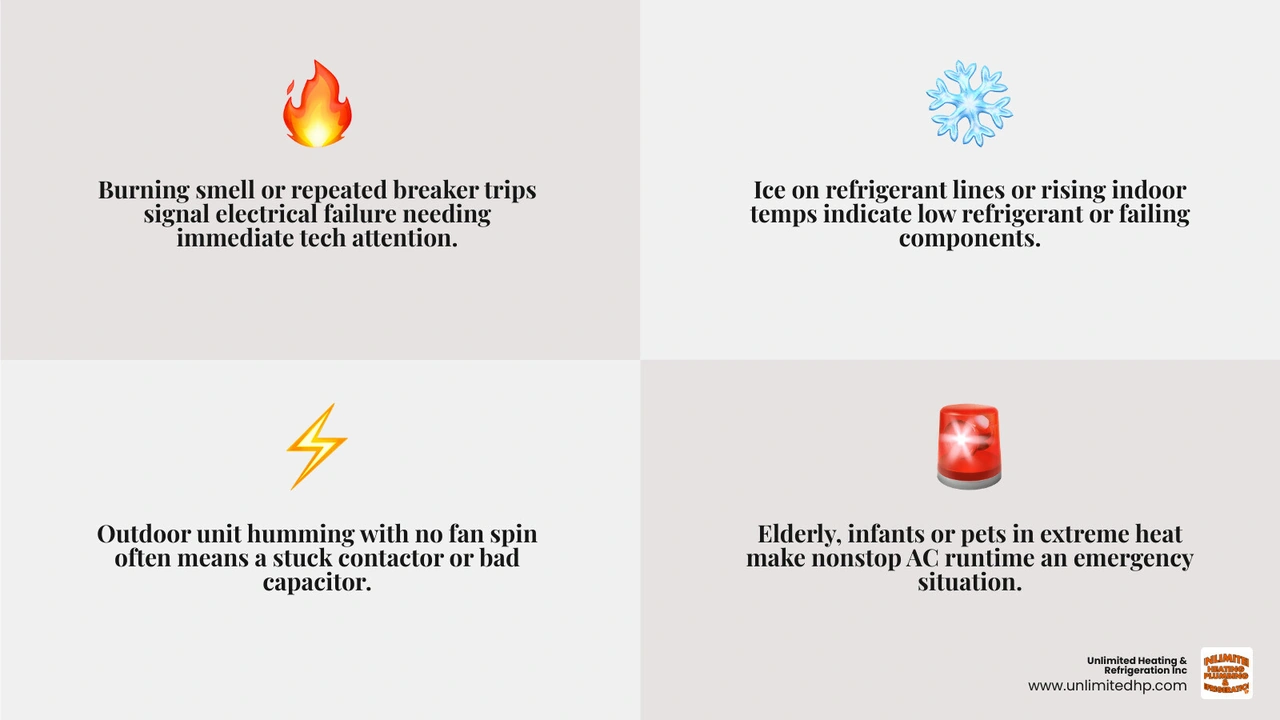
infographic showing common reasons an AC runs nonstop in summer and when to call a technician infographic

Know your when to call a technician for an ac that will not shut off in summer terms:

Why Your Air Conditioner Runs Continuously Without Stopping

When an air conditioner is functioning optimally, it operates in predictable intervals. A typical cooling cycle should last 15–20 minutes and run about 2–3 cycles per hour. This rhythm allows the system to lower the indoor temperature to your thermostat's setpoint, extract excess humidity, and then rest.

However, during peak summer days, you might notice your system running longer. While some extended runtime is normal during an intense heatwave, a system that literally never shuts down indicates an underlying problem. If your system runs nonstop, it is under immense physical strain, which can lead to premature equipment failure and highly inflated monthly utility bills. In fact, nonstop AC operation can increase monthly electric bills by 20–30% or more due to continuous energy draw.

Understanding why your system is struggling is the first step in resolving the issue. If you are experiencing this in the Palouse region, reading about our insights on AC Running Constantly in Palouse Summer Heat can help you understand how localized climate factors influence your system's performance. Generally, the root causes of a nonstop air conditioner fall into two categories: simple airflow/thermostat issues or more complex mechanical and electrical failures.

Thermostat and Airflow Issues That Keep the System Running

Often, the reason an air conditioner refuses to shut down boils down to how air moves through the system or how the thermostat communicates with the equipment.

  • The "ON" vs. "AUTO" Fan Setting: This is one of the most common oversights we see. On your thermostat, you will find a setting for the fan, typically labeled "ON" and "AUTO." If this is set to "ON," the indoor blower motor will run continuously, blowing air through your vents 24/7, even when the outdoor compressor has cycled off and no actual cooling is occurring. Switching this setting to "AUTO" ensures the fan only runs when the system is actively cooling.
  • Clogged Air Filters: A dirty air filter is the most common cause of nonstop AC operation. When a filter becomes choked with dust, pet dander, and debris, it severely restricts airflow. Because the system cannot pull enough warm air across the indoor evaporator coil, heat exchange cannot happen efficiently. The system has to work twice as hard and run much longer to lower the temperature even a single degree.
  • Frozen Evaporator Coils: Restricted airflow from a dirty filter or blocked vents can cause the temperature of the indoor evaporator coil to drop below freezing. Moisture in the air then freezes directly onto the coil, creating a block of ice. Once the coil is iced over, it can no longer absorb heat from your home. The air conditioner will keep running indefinitely, blowing warm or weak air, in a futile attempt to reach the set temperature. To learn more about this specific failure, explore Why Won't Your AC Turn Off When It Reaches the Set Temperature.

Mechanical and Electrical Failures Preventing Shutdown

If your airflow is clear and your thermostat settings are correct, the problem is likely mechanical or electrical. These issues require a deeper look into the components that control the flow of electricity and refrigerant.

  • A Stuck Contactor: The contactor is essentially an electrically controlled switch located in your outdoor condenser unit. When your thermostat calls for cooling, it sends a 24-volt signal to the contactor, closing the switch and sending high-voltage power to the compressor and outdoor fan. Over time, the electrical contacts can pit, arc, or physically weld themselves together. When a contactor is stuck or welded shut, power flows to the compressor continuously, meaning the outdoor unit will keep running even if you turn the thermostat completely off.
  • Failed Start or Run Capacitor: Capacitors store electrical energy to help start and run the compressor and fan motors. If a capacitor fails or begins to degrade under the stress of extreme summer heat, the motors may struggle to run efficiently or fail to start altogether, causing the system to run constantly without actually cooling.
  • Refrigerant Leaks: Refrigerant is the lifeblood of your air conditioner; it circulates in a closed loop to absorb heat from inside and reject it outside. If there is a leak in the copper lines or coils, the low refrigerant level reduces the system's cooling capacity. The AC will run nonstop because it simply does not have enough cooling power to satisfy the thermostat.
  • Control Board Malfunctions: Modern systems rely on electronic control boards to coordinate cycles. A short circuit or a failed relay on the control board can keep sending power to the cooling components long after the target temperature has been reached. If your system is cycling erratically, you can read about other electronic and mechanical issues in our guide on AC Keeps Turning On and Off: What Is Wrong.

Safe DIY Troubleshooting Steps Before Calling a Professional

Before you pick up the phone to schedule a service call, there are several safe, straightforward checks you can perform. These troubleshooting steps can help you determine if the issue is a minor setting error or if it requires professional diagnostic tools.
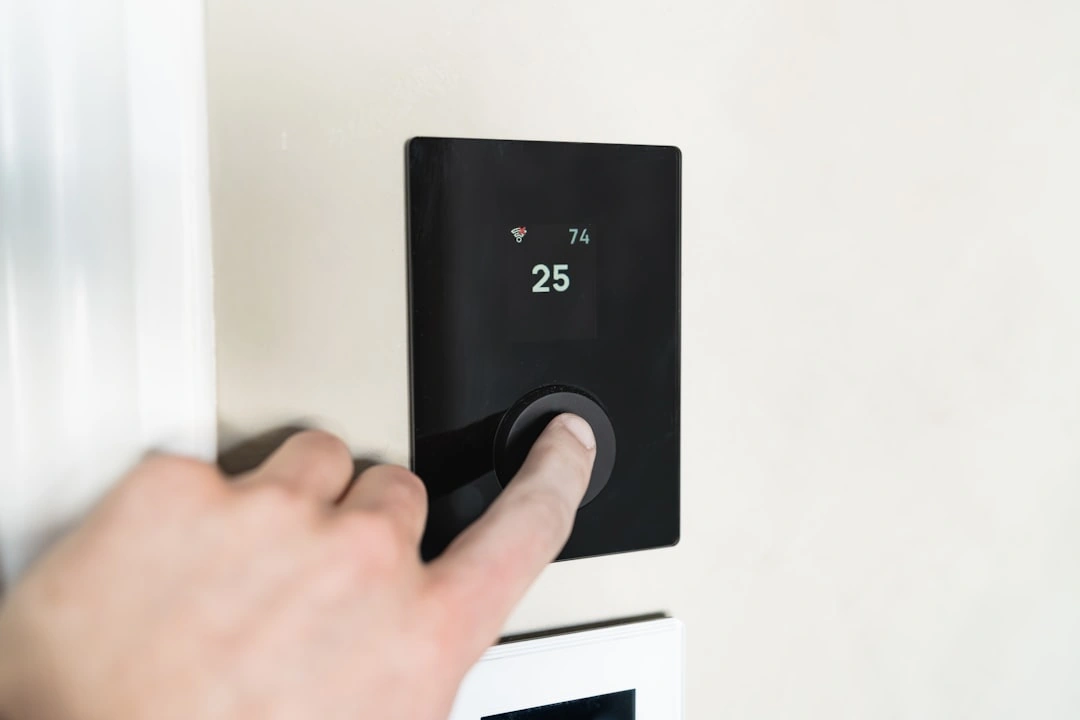
homeowner checking a thermostat in their living room

When troubleshooting, always prioritize safety. Never open electrical panels, touch low-voltage wiring, or attempt to handle refrigerant lines yourself. For a comprehensive overview of what you can safely check, refer to our guide on AC Troubleshooting Before Calling a Pro.

  1. Verify Thermostat Settings: Confirm that your thermostat is set to "COOL" and that the temperature setting is lower than the current room temperature. Check the fan setting and ensure it is set to "AUTO" rather than "ON." If you have a smart thermostat, check to see if a hold or an automated schedule is overriding your manual commands.
  2. Inspect and Replace the Air Filter: Pull out your air filter and hold it up to a light source. If light cannot pass through it, replace it immediately. During peak summer, filters should be checked monthly and replaced every 30 to 90 days depending on your household (pets, allergies, etc.).
  3. Check Indoor Vents and Grilles: Walk through your home and ensure that all supply registers and return air grilles are open and unobstructed by furniture, drapes, or rugs. Blocking vents restricts airflow and can cause the system to run continuously or freeze up.
  4. Examine the Outdoor Condenser: Walk outside and look at your outdoor unit. Ensure there is at least two feet of clear space around the entire unit. Clear away tall grass, weeds, fallen leaves, or nesting materials. If the delicate aluminum fins on the condenser coils are caked with dirt or pollen, they cannot shed heat efficiently, forcing the system to run longer.

How to Safely Shut Down a System That Won't Turn Off

If your air conditioner is running nonstop and refuses to shut off even when you turn the thermostat to "OFF," you must shut it down manually to prevent severe damage to the compressor.

  • Locate the Emergency Shut-Off Switch: Most homes have an indoor service switch (which looks like a standard light switch) located near the indoor furnace or air handler, often in a utility closet, basement, or attic. Flipping this switch to "OFF" will cut power to the indoor blower.
  • Use the Outdoor Disconnect Box: Outside, near your condenser unit, you will find a metal disconnect box mounted on the wall. Open the cover carefully. Inside, there will be a pull-out plug, a circuit breaker, or a switch. Safely pulling the plug or flipping the switch to "OFF" will immediately cut high-voltage power to the compressor and outdoor fan.
  • Flip the Dedicated Circuit Breaker: If you cannot locate the outdoor disconnect, go to your home's main electrical panel. Locate the circuit breaker labeled "AC," "Air Conditioner," or "HP" (Heat Pump) and flip it completely to the "OFF" position.

Once the system is shut down, let it rest. If you plan to restart it to see if a simple power reset resolved a control logic error, keep the 3-minute rule in mind. Never turn an air conditioner off and immediately back on. Wait at least three to five minutes before restoring power. This delay allows the high refrigerant pressures inside the system to equalize and lets the compressor motor cool down, preventing a hard start that could damage electrical windings or ruin the compressor.

When to Call a Technician for an AC That Will Not Shut Off in Summer

While DIY troubleshooting can resolve basic airflow issues, there are clear boundaries where homeowner safety ends and professional expertise must begin. Operating a malfunctioning air conditioner can quickly turn a minor component failure into an incredibly expensive breakdown.

Knowing when to call a technician for an AC that will not shut off in summer is vital for protecting your home and your investment. If your basic troubleshooting steps do not stop the continuous operation, or if you encounter any of the following warning signs, it is time to contact us for professional AC Repair Lewiston ID:

  • Electrical Burning Smells: If you smell burning plastic, ozone, or sulfur coming from your vents or the outdoor unit, shut down the system at the breaker immediately. This indicates overheating wires, a failing motor winding, or a compromised control board, which poses a severe fire hazard.
  • Tripping Circuit Breakers: If your AC trips the circuit breaker, reset it only once. If it trips a second time, do not attempt to reset it again. A repeatedly tripping breaker is a safety mechanism designed to prevent electrical fires and indicates a direct short circuit, a locked compressor rotor, or a failing capacitor.
  • Visible Ice Build-Up: If you see ice forming on the copper refrigerant lines leading into your outdoor unit or on the indoor evaporator coil casing, turn the system off immediately. Let the system thaw completely (this can take several hours) and call a technician. Running a frozen system can cause liquid refrigerant to flood back into the compressor, destroying it.
  • Water Leaks Around the Indoor Unit: A frozen coil will produce a massive amount of water as it thaws, which can quickly overflow your condensate drain pan and damage your drywall or ceilings. Additionally, a clogged condensate drain line can trigger a safety float switch, shutting down the cooling but sometimes leaving the blower running.

Recognizing When to Call a Technician for an AC That Will Not Shut Off in Summer to Prevent Compressor Damage

The compressor is the heart of your air conditioner, responsible for pumping refrigerant through the system. It is also the most expensive single component in your HVAC unit. Operating an AC continuously without cycling puts extreme thermal and mechanical stress on the compressor.

Continuous runtime deprives the compressor of its natural cooling periods and can lead to overheating, motor winding degradation, and eventual mechanical failure. If your system is running constantly because of a refrigerant leak or restricted airflow, the compressor may also be starved of the lubricating oil that circulates with the refrigerant.

Replacing a residential AC compressor is a major repair. In many cases, especially with systems that are nearing the end of their lifespan, compressor failure means it is more practical to replace the entire outdoor unit. To help you weigh your options when facing a major component failure, consult our resource on How Much AC Repair Is Too Much Before Replacing the Unit.

When to Call a Technician for an AC That Will Not Shut Off in Summer as an Emergency

While a struggling air conditioner is always a concern, certain situations elevate the problem to an absolute emergency. You should request emergency service if:

  • Outdoor Temperatures Exceed 90°F: During extreme summer heatwaves, indoor temperatures can climb rapidly to dangerous levels if your AC fails or runs constantly without cooling.
  • Vulnerable Occupants Are Present: If your household includes infants, elderly family members, individuals with chronic illnesses, or pets, excessive heat can quickly become life-threatening.
  • Severe Water Damage Risk: If a frozen system or clogged drain is actively leaking water into finished living spaces, immediate professional intervention is required to prevent mold growth and structural damage.

If you find yourself in an urgent situation, do not hesitate to reach out for prompt, professional AC Service Lewiston ID.

System Sizing, Aging, and Prevention Strategies

Sometimes, an air conditioner runs continuously not because a single part has broken, but because of fundamental issues with the system's size, age, or physical condition.
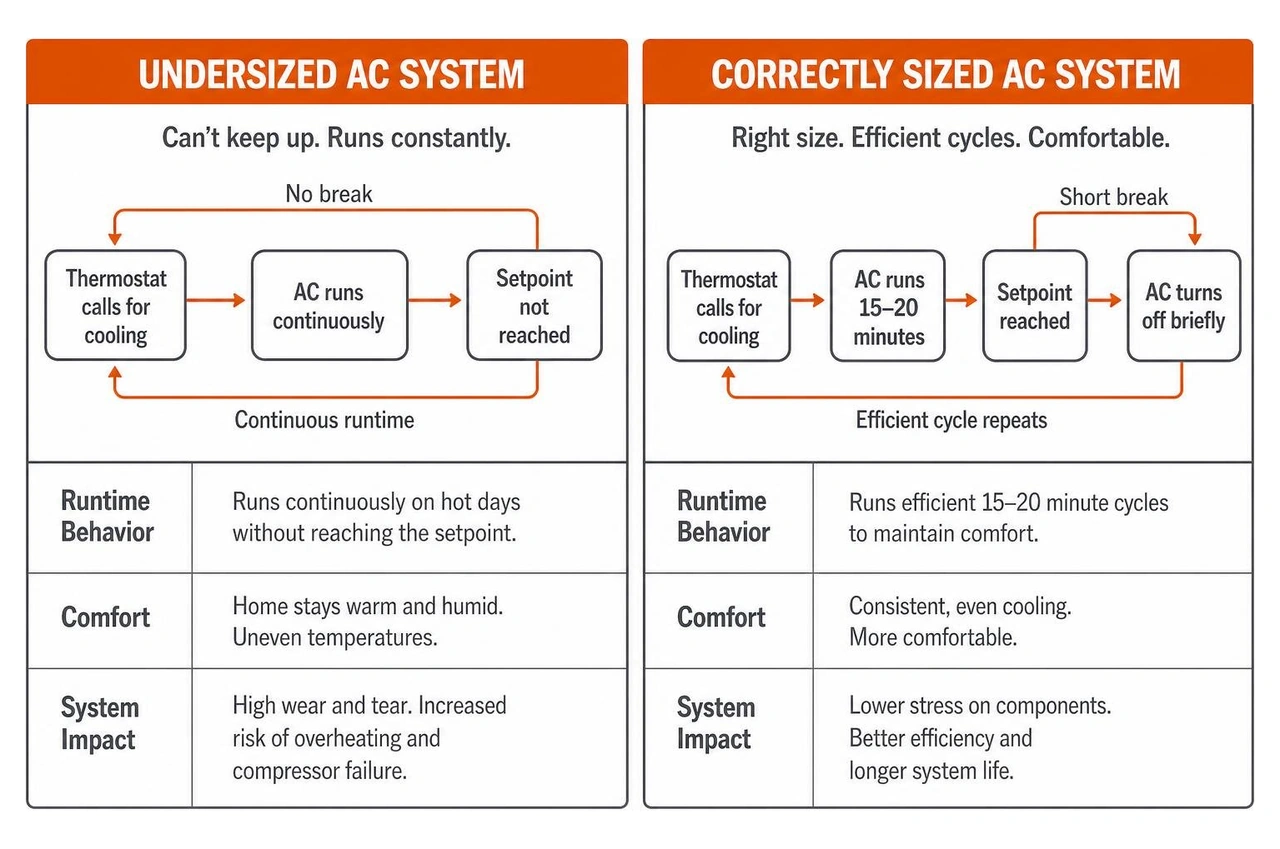
diagram comparing an undersized and correctly sized AC system

Proper system sizing is critical. Many homeowners assume that a larger air conditioner is always better, but this is a misconception. To ensure your home remains comfortable and efficient, HVAC professionals must perform a detailed Manual J load calculation. This calculation takes into account your home's square footage, layout, insulation levels, window orientations, and local climate conditions to determine the exact cooling capacity required.

System Sizing CharacteristicUndersized AC SystemCorrectly Sized AC SystemOversized AC System
Runtime BehaviorRuns continuously on hot days without reaching the setpoint.Runs efficient 15–20 minute cycles to maintain comfort.Turns on and off rapidly (short cycles), running for under 10 minutes.
Humidity ControlPoor; runs constantly but struggles to remove moisture effectively.Excellent; runs long enough to properly extract indoor humidity.Terrible; cools the air too quickly to remove moisture, leaving the home clammy.
Energy EfficiencyVery low; continuous operation drives up utility bills.High; operates within its designed peak efficiency range.Low; frequent startup events draw high amounts of electrical current.
Component WearExtreme; continuous operation accelerates compressor wear.Balanced; normal wear and tear over a projected 10–15 year lifespan.High; constant starting and stopping damages the compressor and contactors.

System age also plays a massive role in continuous runtime. As an air conditioner approaches 10 to 15 years of age, its mechanical components naturally wear down, heat transfer efficiency declines, and it must run longer to achieve the same cooling effect. If your system is old and struggles to keep up with the summer heat, it might be time to review the Signs You Need an AC Replacement and explore options for a modern, high-efficiency AC Replacement Lewiston ID.

The Role of Annual Maintenance in Preventing Continuous Runtime

The absolute best way to keep your air conditioner from running nonstop during a hot Palouse summer is to schedule professional preventative maintenance every spring.

During a comprehensive tune-up, a technician will clean your outdoor condenser coils, inspect your indoor evaporator coil, verify refrigerant levels, test capacitors, lubricate moving parts, and clear your condensate drain line. Catching small issues—like a weak capacitor, a tiny refrigerant leak, or slightly dirty coils—before the summer heat sets in prevents the system from overworking itself and breaking down when you need it most. To protect your home's comfort, make sure to schedule regular AC Maintenance Lewiston ID.

Frequently Asked Questions About Nonstop AC Operation

Why is my AC running but not cooling the house?

If your system is running continuously but the indoor temperature is rising or remaining warm, the issue is typically a result of restricted airflow (like a severely clogged filter), dirty condenser coils that cannot release heat, or a low refrigerant charge due to a leak. Additionally, a failed compressor or outdoor fan motor can leave the indoor blower running constantly, circulating warm indoor air without actually cooling it.

Can running my AC constantly damage the compressor?

Yes. Air conditioners are designed to cycle on and off. Continuous operation causes the compressor motor to run extremely hot, accelerating the breakdown of internal lubricants and electrical insulation. This can lead to a locked rotor, a burned-out motor winding, or complete mechanical failure, which are very expensive to repair.

What is the 3-minute rule for air conditioners?

The 3-minute rule is a safety guideline that states you should always wait at least three to five minutes before restarting an air conditioner after it has been turned off. This delay allows the high-pressure refrigerant gas in the compressor to discharge and equalize throughout the system, preventing the compressor from trying to start against high pressure, which can trip breakers or damage the motor. Most modern systems and smart thermostats have built-in automatic delays to enforce this rule.

Conclusion

An air conditioner that runs continuously during a hot summer day is a clear cry for help. While simple issues like a wrong thermostat setting or a dirty air filter can easily be addressed at home, more complex electrical and mechanical problems require the steady hands of a professional. Knowing when to call a technician for an AC that will not shut off in summer protects your home from high energy bills, severe water damage, and catastrophic compressor failure.

When you need reliable cooling support on the Palouse, Unlimited Heating & Refrigeration Inc is here to help. As a family-owned business with over 20 years of experience serving Moscow, ID, and surrounding areas, we are dedicated to keeping your home safe and comfortable. As a trusted Daikin dealer, we stand behind our work with an outstanding 12-year warranty and our signature Comfort Promise.

Don't let a struggling AC ruin your summer comfort or damage your home's mechanical systems. Schedule professional cooling services today with our expert team to restore efficiency, lower your utility bills, and enjoy worry-free indoor comfort all season long.

When to Call a Technician for an AC That Will Not Shut Off in Summer

Knowing when to call a technician for an AC that will not shut off in summer could save your compressor — and your comfort. If your system is running nonstop and you're in Moscow, ID, here's a quick answer before we get into the details:

Call an HVAC technician right away if you notice any of the following:

  • Burning or electrical smell coming from the unit
  • Ice forming on the refrigerant lines or indoor coil
  • Water leaking around the indoor air handler
  • The circuit breaker trips repeatedly
  • The outdoor unit hums but the fan isn't spinning
  • Your home temperature keeps rising despite the system running
  • Vulnerable occupants (elderly, infants, pets) are in the home during extreme heat

If none of those apply, some basic troubleshooting steps may resolve the problem before a service call is needed — and we'll walk you through those below.

A normal AC cooling cycle lasts about 15 to 20 minutes and runs two to three times per hour. When your system runs longer than that — or simply never shuts off — something is wrong. It might be as simple as a dirty filter or a thermostat set to the wrong fan mode. Or it could point to a stuck contactor, a refrigerant leak, or a failing compressor that needs professional attention before it fails completely.

For homeowners in Moscow, ID, summer AC problems don't wait. The Palouse region's warm summers put real demand on cooling equipment, and a system that won't cycle off properly wastes energy, drives up electric bills, and wears out components fast.

infographic showing common reasons an AC runs nonstop in summer and when to call a technician infographic

Know your when to call a technician for an ac that will not shut off in summer terms:

Why Your Air Conditioner Runs Continuously Without Stopping

When an air conditioner is functioning optimally, it operates in predictable intervals. A typical cooling cycle should last 15–20 minutes and run about 2–3 cycles per hour. This rhythm allows the system to lower the indoor temperature to your thermostat's setpoint, extract excess humidity, and then rest.

However, during peak summer days, you might notice your system running longer. While some extended runtime is normal during an intense heatwave, a system that literally never shuts down indicates an underlying problem. If your system runs nonstop, it is under immense physical strain, which can lead to premature equipment failure and highly inflated monthly utility bills. In fact, nonstop AC operation can increase monthly electric bills by 20–30% or more due to continuous energy draw.

Understanding why your system is struggling is the first step in resolving the issue. If you are experiencing this in the Palouse region, reading about our insights on AC Running Constantly in Palouse Summer Heat can help you understand how localized climate factors influence your system's performance. Generally, the root causes of a nonstop air conditioner fall into two categories: simple airflow/thermostat issues or more complex mechanical and electrical failures.

Thermostat and Airflow Issues That Keep the System Running

Often, the reason an air conditioner refuses to shut down boils down to how air moves through the system or how the thermostat communicates with the equipment.

  • The "ON" vs. "AUTO" Fan Setting: This is one of the most common oversights we see. On your thermostat, you will find a setting for the fan, typically labeled "ON" and "AUTO." If this is set to "ON," the indoor blower motor will run continuously, blowing air through your vents 24/7, even when the outdoor compressor has cycled off and no actual cooling is occurring. Switching this setting to "AUTO" ensures the fan only runs when the system is actively cooling.
  • Clogged Air Filters: A dirty air filter is the most common cause of nonstop AC operation. When a filter becomes choked with dust, pet dander, and debris, it severely restricts airflow. Because the system cannot pull enough warm air across the indoor evaporator coil, heat exchange cannot happen efficiently. The system has to work twice as hard and run much longer to lower the temperature even a single degree.
  • Frozen Evaporator Coils: Restricted airflow from a dirty filter or blocked vents can cause the temperature of the indoor evaporator coil to drop below freezing. Moisture in the air then freezes directly onto the coil, creating a block of ice. Once the coil is iced over, it can no longer absorb heat from your home. The air conditioner will keep running indefinitely, blowing warm or weak air, in a futile attempt to reach the set temperature. To learn more about this specific failure, explore Why Won't Your AC Turn Off When It Reaches the Set Temperature.

Mechanical and Electrical Failures Preventing Shutdown

If your airflow is clear and your thermostat settings are correct, the problem is likely mechanical or electrical. These issues require a deeper look into the components that control the flow of electricity and refrigerant.

  • A Stuck Contactor: The contactor is essentially an electrically controlled switch located in your outdoor condenser unit. When your thermostat calls for cooling, it sends a 24-volt signal to the contactor, closing the switch and sending high-voltage power to the compressor and outdoor fan. Over time, the electrical contacts can pit, arc, or physically weld themselves together. When a contactor is stuck or welded shut, power flows to the compressor continuously, meaning the outdoor unit will keep running even if you turn the thermostat completely off.
  • Failed Start or Run Capacitor: Capacitors store electrical energy to help start and run the compressor and fan motors. If a capacitor fails or begins to degrade under the stress of extreme summer heat, the motors may struggle to run efficiently or fail to start altogether, causing the system to run constantly without actually cooling.
  • Refrigerant Leaks: Refrigerant is the lifeblood of your air conditioner; it circulates in a closed loop to absorb heat from inside and reject it outside. If there is a leak in the copper lines or coils, the low refrigerant level reduces the system's cooling capacity. The AC will run nonstop because it simply does not have enough cooling power to satisfy the thermostat.
  • Control Board Malfunctions: Modern systems rely on electronic control boards to coordinate cycles. A short circuit or a failed relay on the control board can keep sending power to the cooling components long after the target temperature has been reached. If your system is cycling erratically, you can read about other electronic and mechanical issues in our guide on AC Keeps Turning On and Off: What Is Wrong.

Safe DIY Troubleshooting Steps Before Calling a Professional

Before you pick up the phone to schedule a service call, there are several safe, straightforward checks you can perform. These troubleshooting steps can help you determine if the issue is a minor setting error or if it requires professional diagnostic tools.

homeowner checking a thermostat in their living room

When troubleshooting, always prioritize safety. Never open electrical panels, touch low-voltage wiring, or attempt to handle refrigerant lines yourself. For a comprehensive overview of what you can safely check, refer to our guide on AC Troubleshooting Before Calling a Pro.

  1. Verify Thermostat Settings: Confirm that your thermostat is set to "COOL" and that the temperature setting is lower than the current room temperature. Check the fan setting and ensure it is set to "AUTO" rather than "ON." If you have a smart thermostat, check to see if a hold or an automated schedule is overriding your manual commands.
  2. Inspect and Replace the Air Filter: Pull out your air filter and hold it up to a light source. If light cannot pass through it, replace it immediately. During peak summer, filters should be checked monthly and replaced every 30 to 90 days depending on your household (pets, allergies, etc.).
  3. Check Indoor Vents and Grilles: Walk through your home and ensure that all supply registers and return air grilles are open and unobstructed by furniture, drapes, or rugs. Blocking vents restricts airflow and can cause the system to run continuously or freeze up.
  4. Examine the Outdoor Condenser: Walk outside and look at your outdoor unit. Ensure there is at least two feet of clear space around the entire unit. Clear away tall grass, weeds, fallen leaves, or nesting materials. If the delicate aluminum fins on the condenser coils are caked with dirt or pollen, they cannot shed heat efficiently, forcing the system to run longer.

How to Safely Shut Down a System That Won't Turn Off

If your air conditioner is running nonstop and refuses to shut off even when you turn the thermostat to "OFF," you must shut it down manually to prevent severe damage to the compressor.

  • Locate the Emergency Shut-Off Switch: Most homes have an indoor service switch (which looks like a standard light switch) located near the indoor furnace or air handler, often in a utility closet, basement, or attic. Flipping this switch to "OFF" will cut power to the indoor blower.
  • Use the Outdoor Disconnect Box: Outside, near your condenser unit, you will find a metal disconnect box mounted on the wall. Open the cover carefully. Inside, there will be a pull-out plug, a circuit breaker, or a switch. Safely pulling the plug or flipping the switch to "OFF" will immediately cut high-voltage power to the compressor and outdoor fan.
  • Flip the Dedicated Circuit Breaker: If you cannot locate the outdoor disconnect, go to your home's main electrical panel. Locate the circuit breaker labeled "AC," "Air Conditioner," or "HP" (Heat Pump) and flip it completely to the "OFF" position.

Once the system is shut down, let it rest. If you plan to restart it to see if a simple power reset resolved a control logic error, keep the 3-minute rule in mind. Never turn an air conditioner off and immediately back on. Wait at least three to five minutes before restoring power. This delay allows the high refrigerant pressures inside the system to equalize and lets the compressor motor cool down, preventing a hard start that could damage electrical windings or ruin the compressor.

When to Call a Technician for an AC That Will Not Shut Off in Summer

While DIY troubleshooting can resolve basic airflow issues, there are clear boundaries where homeowner safety ends and professional expertise must begin. Operating a malfunctioning air conditioner can quickly turn a minor component failure into an incredibly expensive breakdown.

Knowing when to call a technician for an AC that will not shut off in summer is vital for protecting your home and your investment. If your basic troubleshooting steps do not stop the continuous operation, or if you encounter any of the following warning signs, it is time to contact us for professional AC Repair Lewiston ID:

  • Electrical Burning Smells: If you smell burning plastic, ozone, or sulfur coming from your vents or the outdoor unit, shut down the system at the breaker immediately. This indicates overheating wires, a failing motor winding, or a compromised control board, which poses a severe fire hazard.
  • Tripping Circuit Breakers: If your AC trips the circuit breaker, reset it only once. If it trips a second time, do not attempt to reset it again. A repeatedly tripping breaker is a safety mechanism designed to prevent electrical fires and indicates a direct short circuit, a locked compressor rotor, or a failing capacitor.
  • Visible Ice Build-Up: If you see ice forming on the copper refrigerant lines leading into your outdoor unit or on the indoor evaporator coil casing, turn the system off immediately. Let the system thaw completely (this can take several hours) and call a technician. Running a frozen system can cause liquid refrigerant to flood back into the compressor, destroying it.
  • Water Leaks Around the Indoor Unit: A frozen coil will produce a massive amount of water as it thaws, which can quickly overflow your condensate drain pan and damage your drywall or ceilings. Additionally, a clogged condensate drain line can trigger a safety float switch, shutting down the cooling but sometimes leaving the blower running.

Recognizing When to Call a Technician for an AC That Will Not Shut Off in Summer to Prevent Compressor Damage

The compressor is the heart of your air conditioner, responsible for pumping refrigerant through the system. It is also the most expensive single component in your HVAC unit. Operating an AC continuously without cycling puts extreme thermal and mechanical stress on the compressor.

Continuous runtime deprives the compressor of its natural cooling periods and can lead to overheating, motor winding degradation, and eventual mechanical failure. If your system is running constantly because of a refrigerant leak or restricted airflow, the compressor may also be starved of the lubricating oil that circulates with the refrigerant.

Replacing a residential AC compressor is a major repair. In many cases, especially with systems that are nearing the end of their lifespan, compressor failure means it is more practical to replace the entire outdoor unit. To help you weigh your options when facing a major component failure, consult our resource on How Much AC Repair Is Too Much Before Replacing the Unit.

When to Call a Technician for an AC That Will Not Shut Off in Summer as an Emergency

While a struggling air conditioner is always a concern, certain situations elevate the problem to an absolute emergency. You should request emergency service if:

  • Outdoor Temperatures Exceed 90°F: During extreme summer heatwaves, indoor temperatures can climb rapidly to dangerous levels if your AC fails or runs constantly without cooling.
  • Vulnerable Occupants Are Present: If your household includes infants, elderly family members, individuals with chronic illnesses, or pets, excessive heat can quickly become life-threatening.
  • Severe Water Damage Risk: If a frozen system or clogged drain is actively leaking water into finished living spaces, immediate professional intervention is required to prevent mold growth and structural damage.

If you find yourself in an urgent situation, do not hesitate to reach out for prompt, professional AC Service Lewiston ID.

System Sizing, Aging, and Prevention Strategies

Sometimes, an air conditioner runs continuously not because a single part has broken, but because of fundamental issues with the system's size, age, or physical condition.

diagram comparing an undersized and correctly sized AC system

Proper system sizing is critical. Many homeowners assume that a larger air conditioner is always better, but this is a misconception. To ensure your home remains comfortable and efficient, HVAC professionals must perform a detailed Manual J load calculation. This calculation takes into account your home's square footage, layout, insulation levels, window orientations, and local climate conditions to determine the exact cooling capacity required.

System Sizing CharacteristicUndersized AC SystemCorrectly Sized AC SystemOversized AC System
Runtime BehaviorRuns continuously on hot days without reaching the setpoint.Runs efficient 15–20 minute cycles to maintain comfort.Turns on and off rapidly (short cycles), running for under 10 minutes.
Humidity ControlPoor; runs constantly but struggles to remove moisture effectively.Excellent; runs long enough to properly extract indoor humidity.Terrible; cools the air too quickly to remove moisture, leaving the home clammy.
Energy EfficiencyVery low; continuous operation drives up utility bills.High; operates within its designed peak efficiency range.Low; frequent startup events draw high amounts of electrical current.
Component WearExtreme; continuous operation accelerates compressor wear.Balanced; normal wear and tear over a projected 10–15 year lifespan.High; constant starting and stopping damages the compressor and contactors.

System age also plays a massive role in continuous runtime. As an air conditioner approaches 10 to 15 years of age, its mechanical components naturally wear down, heat transfer efficiency declines, and it must run longer to achieve the same cooling effect. If your system is old and struggles to keep up with the summer heat, it might be time to review the Signs You Need an AC Replacement and explore options for a modern, high-efficiency AC Replacement Lewiston ID.

The Role of Annual Maintenance in Preventing Continuous Runtime

The absolute best way to keep your air conditioner from running nonstop during a hot Palouse summer is to schedule professional preventative maintenance every spring.

During a comprehensive tune-up, a technician will clean your outdoor condenser coils, inspect your indoor evaporator coil, verify refrigerant levels, test capacitors, lubricate moving parts, and clear your condensate drain line. Catching small issues—like a weak capacitor, a tiny refrigerant leak, or slightly dirty coils—before the summer heat sets in prevents the system from overworking itself and breaking down when you need it most. To protect your home's comfort, make sure to schedule regular AC Maintenance Lewiston ID.

Frequently Asked Questions About Nonstop AC Operation

Why is my AC running but not cooling the house?

If your system is running continuously but the indoor temperature is rising or remaining warm, the issue is typically a result of restricted airflow (like a severely clogged filter), dirty condenser coils that cannot release heat, or a low refrigerant charge due to a leak. Additionally, a failed compressor or outdoor fan motor can leave the indoor blower running constantly, circulating warm indoor air without actually cooling it.

Can running my AC constantly damage the compressor?

Yes. Air conditioners are designed to cycle on and off. Continuous operation causes the compressor motor to run extremely hot, accelerating the breakdown of internal lubricants and electrical insulation. This can lead to a locked rotor, a burned-out motor winding, or complete mechanical failure, which are very expensive to repair.

What is the 3-minute rule for air conditioners?

The 3-minute rule is a safety guideline that states you should always wait at least three to five minutes before restarting an air conditioner after it has been turned off. This delay allows the high-pressure refrigerant gas in the compressor to discharge and equalize throughout the system, preventing the compressor from trying to start against high pressure, which can trip breakers or damage the motor. Most modern systems and smart thermostats have built-in automatic delays to enforce this rule.

Conclusion

An air conditioner that runs continuously during a hot summer day is a clear cry for help. While simple issues like a wrong thermostat setting or a dirty air filter can easily be addressed at home, more complex electrical and mechanical problems require the steady hands of a professional. Knowing when to call a technician for an AC that will not shut off in summer protects your home from high energy bills, severe water damage, and catastrophic compressor failure.

When you need reliable cooling support on the Palouse, Unlimited Heating & Refrigeration Inc is here to help. As a family-owned business with over 20 years of experience serving Moscow, ID, and surrounding areas, we are dedicated to keeping your home safe and comfortable. As a trusted Daikin dealer, we stand behind our work with an outstanding 12-year warranty and our signature Comfort Promise.

Don't let a struggling AC ruin your summer comfort or damage your home's mechanical systems. Schedule professional cooling services today with our expert team to restore efficiency, lower your utility bills, and enjoy worry-free indoor comfort all season long.

Customer Testimonials

Our customers love our service and support.

Design Element | Unlimited Heating Plumbing & Refrigeration IncDesign Element | Unlimited Heating Plumbing & Refrigeration Inc