
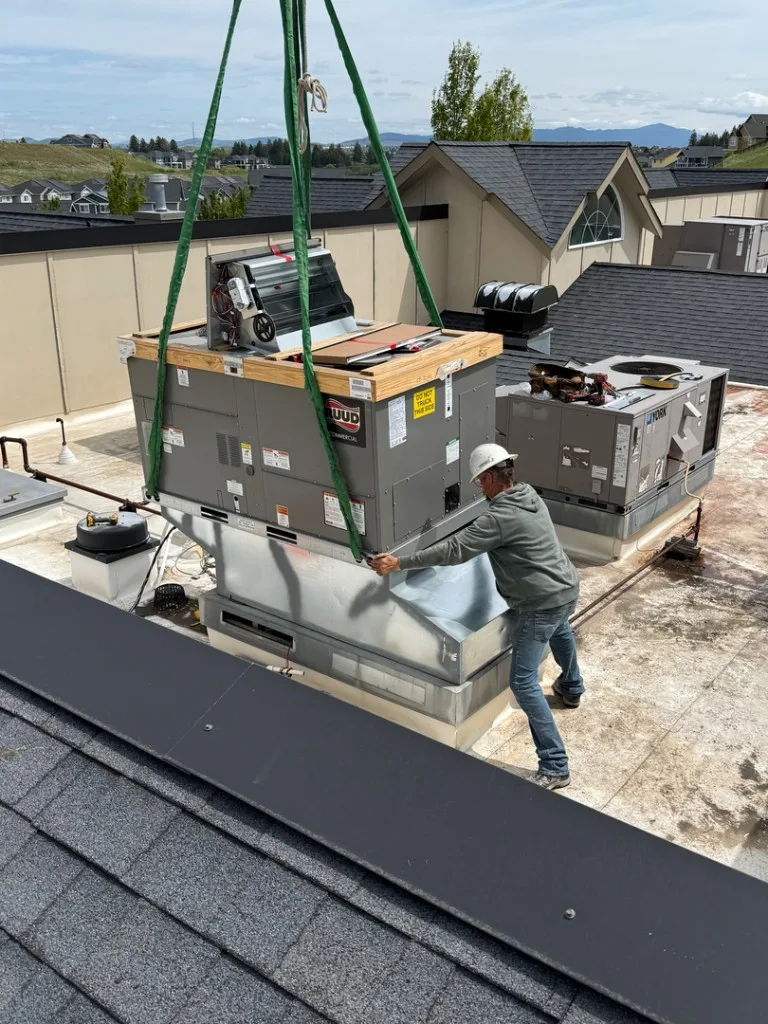
Commercial HVAC Services In Moscow, ID
Ensure your business stays comfortable and efficient with expert HVAC services from Unlimited Heating, Plumbing & Refrigeration Trust our 20 years of experience!
Signs Your Commercial HVAC System Needs Professional Service
Drastic temperature swings between floors, unexpected spikes in utility bills, and rooftop units making a grinding noise that disrupts your business—these are the frustrating realities of a failing climate control system. You might also be fielding constant employee complaints about drafty work areas or noticing fine dust settling on your inventory minutes after cleaning. These aren't just minor annoyances; they are clear indicators that your building's mechanical infrastructure is struggling and putting your daily operations at risk.
For any local business, a compromised heating and cooling system means lost productivity, uncomfortable customers, and the looming threat of a complete shutdown during critical weather. You need a solution that addresses the root of the problem without causing massive downtime for your facility. The technicians at Unlimited Heating, Plumbing & Refrigeration have the commercial-grade expertise to diagnose complex setups and restore reliable comfort to your workplace.
Book My Service 208-596-7757Common Commercial HVAC Warning Signs in Moscow
Skyrocketing Energy Bills
You open your utility bill and it is significantly higher than the same period last year, even though your operating hours and production haven't changed. The system seems to be running non-stop just to maintain a baseline temperature in your building. Because commercial equipment uses a massive amount of electricity and gas, even a minor drop in efficiency translates to hundreds of dollars wasted.
This is a classic sign of internal strain that directly impacts your bottom line every single month. It could be caused by anything from dirty outdoor coils struggling to transfer heat to a slow refrigerant leak. Ignoring this symptom guarantees you will continue overpaying for energy while simultaneously pushing an already stressed component closer to total failure.
Uneven Heating and Cooling
You hear constant feedback from your team about the conference room feeling like an icebox while the main office is stuffy, stagnant, and warm. Customers might also complain that it is too hot near the large display windows but uncomfortably drafty by the front entrance. In commercial spaces, these extreme temperature variations make it impossible to maintain a productive environment.
This symptom often points to deep-seated problems with ductwork, blocked ventilation shafts, malfunctioning zone dampers, or an improperly balanced air distribution system. In the repurposed historic buildings common in our area, the original mechanical layout often no longer matches the current floor plan or occupancy load. Your system is likely working overtime trying to satisfy conflicting thermostat signals from completely different zones.
Strange Noises or Odors
A persistent new noise coming from your vents, mechanical room, or rooftop unit requires immediate attention from a professional. You might hear loud grinding, aggressive squealing, rattling metal, or a heavy clanking sound that echoes through the ductwork. Alternatively, you might notice a musty, foul, or electrical burning smell circulating heavily through the building's air supply.
Mechanical noises usually indicate worn-out industrial bearings, loose drive belts, or a heavy-duty motor that is tearing itself apart. Musty smells suggest standing water and mold growth in an oversized drain pan that isn't clearing properly. Electrical or burning odors signal a severe, potentially dangerous issue with the high-voltage wiring that powers your commercial equipment.
Frequent System Cycling
You notice the heat or air conditioning kicks on and off every few minutes, never completing a full, long cycle to properly condition the indoor space. The system roars to life, runs for a brief moment, and shuts down, only to repeat the process shortly after. This erratic behavior is often especially noticeable during the milder, fluctuating days of spring and fall.
This problem is known as short cycling, and it can be caused by a severely clogged air filter, a faulty control board, or equipment that is vastly oversized for the square footage it regulates. Constant starting and stopping puts extreme electrical and mechanical wear on the compressor. If left unchecked, short cycling will drastically reduce the lifespan of your expensive commercial hardware.
What's Really Wrong with Your Building's HVAC?
Clogged Filters and Dirty Coils
Commercial systems move a massive, continuous volume of air every single hour they operate. Over time, industrial-sized filters become heavily saturated with dust, pollen, and other airborne particles pulled from inside and outside the facility. This thick blockage forces the system's massive blower motor to work significantly harder just to pull air through the ductwork.
The fine agricultural dust from the surrounding region can clog filters and coat evaporator coils surprisingly fast. This effectively suffocates the equipment and severely reduces its ability to transfer heat, leaving your building uncomfortable and your machinery overworked.
The fix involves a thorough chemical cleaning of the coils, clearing the blower assembly, and implementing a strict filter replacement schedule. We often recommend installing Advanced Filtration Systems for businesses in high-particulate environments to protect the sensitive internal components. This proactive approach is a critical part of our regular Commercial HVAC Maintenance & Tune-Up plans.
Mechanical Wear on Aging Components
Heavy-duty climate control systems rely on numerous complex moving parts to keep your facility comfortable. These units contain massive fan motors, heavy rubber drive belts, industrial steel bearings, and high-capacity compressors. After years of running for thousands of hours through demanding, extreme seasons, these parts simply wear out from sheer friction and use.
This mechanical fatigue is especially common in older downtown buildings or sprawling campus facilities where the mechanical infrastructure may be decades old. A worn belt will stretch and slip before it snaps, and failing motor bearings will grind loudly until the motor seizes completely.
The solution involves testing the mechanical tolerances, identifying the specific component that is failing, and replacing it before it breaks. Catching these issues early prevents a chain reaction where the failure of one inexpensive part destroys a major, costly component.
Refrigerant Leaks
Refrigerant is the vital chemical compound that allows your cooling equipment or heat pump to effectively move heat in and out of your building. Because commercial HVAC equipment operates as a closed, pressurized loop, the system should never naturally run low on this fluid. If your system is low on refrigerant, it means a leak has developed somewhere in the lines or coils.
Vibration from heavy operation, age-related copper corrosion, or physical damage on the roof can cause tiny cracks to form in the pressurized lines. You will likely notice the air coming from the vents isn't as cold as it used to be, or you may even see solid ice forming directly on the indoor coils.
We use specialized electronic leak detectors to pinpoint the exact microscopic location of the leak so we can braze it shut. Once the line is securely repaired, we recharge the system to the manufacturer's precise pressure specifications.
Malfunctioning Thermostats and Controls
Modern commercial buildings often rely on complex zoning systems, multiple commercial thermostats, or integrated building management controls. When the sensors in these devices fail, they send incorrect temperature readings back to the main unit on the roof. The system might think the building is freezing when it is actually sweltering, leading to completely inappropriate heating or cooling cycles.
Sometimes the issue is physical, such as a thermostat located too close to a heat-producing copy machine or a drafty exterior door. Other times, the control board inside the primary unit has suffered a short circuit and can no longer process the signals it receives. We test the communication lines between your thermostats and your main equipment to ensure they are talking to each other correctly.
Your Commercial HVAC Service Call: A Clear Process
When you schedule a service call with Unlimited Heating, Plumbing & Refrigeration for your business, we prioritize a clear, professional, and efficient process. A technician will arrive at your facility ready to listen to your description of the problem, including where in the building the symptoms are most severe. We understand that your time is valuable, so we gather the necessary details quickly to minimize any disruption to your staff and customers.
Next, we perform a comprehensive diagnostic inspection of your mechanical systems, utilizing specialized commercial testing equipment. This is not a quick visual check; it involves accessing rooftop units, testing high-voltage electrical contactors, measuring specific refrigerant pressures, and examining complex air handlers. We systematically rule out potential causes until we isolate the exact component that is failing your business.
Once the root cause is firmly identified, we explain the issue to you in straightforward, plain language without unnecessary industry jargon. We outline the exact repair needed and provide a clear, upfront explanation of the costs involved before any wrenches are turned. Our ultimate goal is to give you the precise information you need to make the best operational decision for your facility.
Proactive Solutions for Your Business Climate Control
Many of the most disruptive and expensive repair calls we handle could be completely prevented with proactive care and professional oversight. Setting up a comprehensive Commercial HVAC Maintenance & Tune-Up schedule is the single most effective way to keep your system running efficiently year-round. Regular professional servicing allows us to catch small, inexpensive problems long before they turn into major operational failures.
If your current system is significantly older, requires frequent emergency patching, or simply cannot keep up with the demands of your expanding business, it may be time to discuss a total replacement. Enduring constant Commercial HVAC Repair & Service calls quickly drains your maintenance budget, whereas a new system provides immediate, measurable energy savings. Our team can evaluate your current setup and provide honest, data-driven advice on when a Commercial HVAC Installation & Replacement makes the most financial sense.
Additionally, we frequently help businesses improve their indoor environment by integrating Air Purifiers and Humidifiers directly into their existing ductwork. This ensures optimal indoor air quality, protecting the health of your staff while keeping your customers comfortable.
The Business Cost of Delaying HVAC Repairs
Ignoring commercial climate control problems creates a massive negative ripple effect across your entire business operation. A struggling system doesn't just create a mildly uncomfortable environment; it leads to a documented decrease in employee productivity and focus. It also quickly drives away customers who expect a comfortable, welcoming experience when they enter your establishment.
Minor mechanical issues almost always escalate into major financial headaches when left unaddressed for too long. A simple, inexpensive electrical fault can easily cascade into a catastrophic compressor failure, turning a highly manageable repair into a massive capital expense. Waiting to call for help means risking a complete system failure during a brutal heatwave or a sub-zero winter week, which could force you to close your doors entirely.
Beyond lost productivity and escalating emergency repair costs, a malfunctioning system poses serious safety risks to your building. Poor ventilation, electrical shorts, and leaking condensation can cause property damage and create severe air quality issues. If your business relies on stable temperatures to protect sensitive inventory or specialized equipment, a failed HVAC system can result in devastating product loss.
- Licensed & insured in ID and WA
- Up-front pricing — no surprises
- 20+ years on the Palouse
- Daikin Comfort Pro craftsmanship