
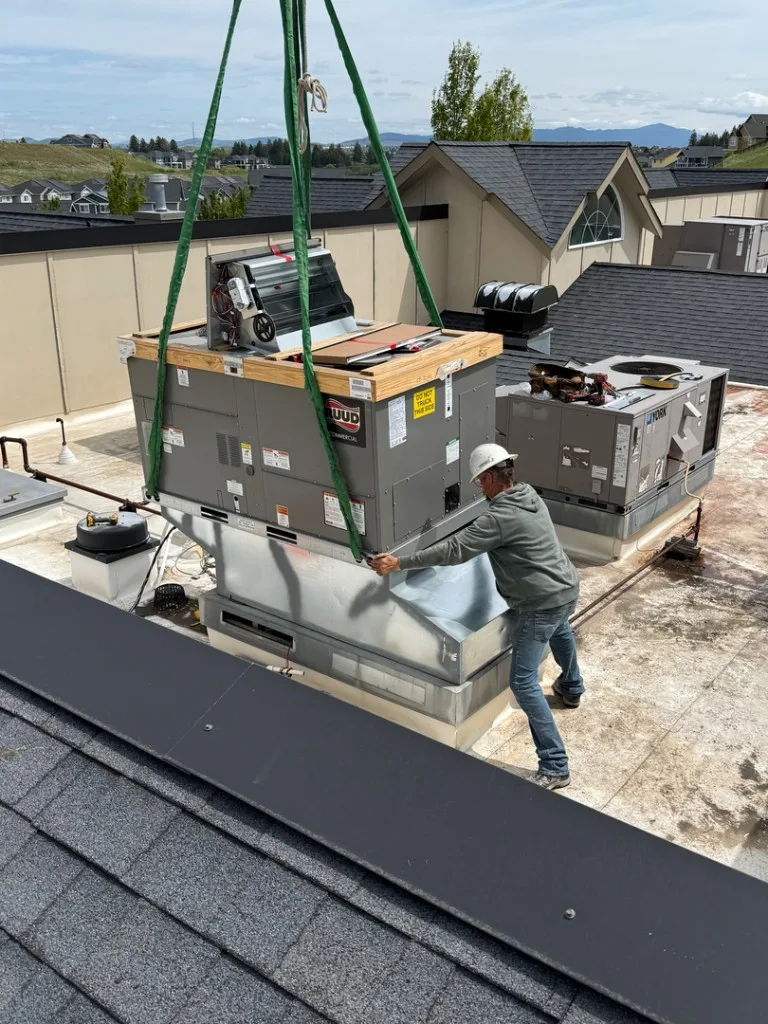
Leak Detection in Moscow, ID
Unlimited Heating, Plumbing & Refrigeration offers expert leak detection in Moscow, ID, with 20+ years of experience and modern diagnostics. Call our team now!
Finding and Fixing Hidden HVAC Leaks
That frustrating feeling when your air conditioner runs all day during a dry Palouse summer but your home never gets cool, the strange sight of ice forming on the outdoor pipes in August, or the sudden appearance of a water stain on your ceiling—these symptoms mean your system is failing. These aren't just minor annoyances; they are classic signs of a leak in your HVAC system that compromises cooling power and risks costly property damage. The expert technicians at Unlimited Heating, Plumbing & Refrigeration have the advanced tools to pinpoint the exact source of any hidden leak and provide a lasting, reliable solution.
Book My Service 208-596-7757Warning Signs You Have an HVAC Leak
Your System Runs Constantly But Doesn't Cool or Heat
You notice the air coming from your vents feels lukewarm, or your heat pump struggles to warm the house despite running for hours on end. The temperature on the thermostat barely moves no matter how low or high you set it. The system just keeps blowing without actually changing the climate in your living space.
This is the number one indicator of a low refrigerant charge caused by a hidden leak. Your system lacks the necessary refrigerant to transfer heat effectively, so it works harder and longer for little to no result. A system cannot consume refrigerant; if the levels are low, it is actively escaping through a breach in the copper lines.
If ignored, this constant strain forces your equipment to operate far outside its design limits. Eventually, this causes the compressor to overheat and fail permanently. Replacing a burned-out compressor is one of the most expensive repairs you can face, often turning a simple leak fix into a major ordeal.
Visible Ice or Frost Buildup
You might see a thick layer of ice or frost coating the copper lines connected to your outdoor unit, even on the hottest days of the year. In some cases, you might open your utility closet and find the A-shaped indoor coil completely encased in a block of solid ice. This is a severe warning sign that your system's internal pressures are completely out of balance.
This freeze-up happens when low refrigerant levels cause the pressure within the system to drop unnaturally low. The evaporator coil gets much colder than it normally should, dropping below the freezing point. When warm household air blows across it, the moisture in that air freezes directly onto the super-chilled metal surface.
This ice acts as a thick insulator, blocking airflow and completely killing your cooling capacity. It also puts immense stress on the blower motor as it struggles to push air through a solid wall of ice.
Water Stains, Puddles, or Drips
You discover a puddle of water pooling on the floor around your indoor furnace, or you spot spreading discoloration on the ceiling directly beneath an attic air handler. Sometimes, you might just notice a sudden, persistent musty smell coming directly from your supply vents. These sensory clues all point to moisture escaping where it shouldn't.
This indicates a leak or blockage in the condensate drainage system rather than a refrigerant issue. As your equipment removes humidity from the indoor air, it creates gallons of water that must drain away safely to the outside. A cracked drain pan or a severely clogged PVC drain line will quickly force that water to back up and overflow.
A persistent condensate leak can quickly saturate drywall, warp expensive hardwood flooring, and ruin insulation. Even worse, it creates the perfect dark, damp environment for mold to grow within the structural framing of your house.
Hissing or Bubbling Noises
You hear a faint but distinct hissing sound near your indoor or outdoor unit when the system is running. Alternatively, you might notice a strange gurgling or bubbling noise coming from the copper lines immediately after the system cycles off. Your HVAC equipment should hum smoothly, so any pressurized hissing is a major red flag.
A hissing sound is often a dead giveaway that gaseous refrigerant is actively escaping from a pinhole leak under high pressure. The system operates under extreme pressure, and even a microscopic crack will force the gas out fast enough to create an audible noise. Bubbling noises usually indicate a larger leak occurring in the liquid refrigerant line.
An active leak means you are losing expensive refrigerant every minute the system runs. At the same time, the breach allows harmful moisture and outside air to get sucked into the sealed system, creating corrosive acids that eat away at internal components.
What Causes HVAC Systems to Leak
Age and Vibration-Related Fatigue
Over years of heavy operation, the constant, powerful vibration from the compressor and heavy fan blades takes a toll on the surrounding metal. This shaking can slowly weaken the brazed joints and delicate connection points throughout your refrigerant lines. Eventually, microscopic stress fractures form and expand into active, hissing leaks.
In many of Moscow's established homes, HVAC systems have been running reliably for over a decade. The cumulative stress from our distinct four-season climate—working hard to cool in the summer and heat through the freezing winter—accelerates these fatigue-related failures. The metal expands and contracts with the wild temperature swings, putting immense pressure on every sealed joint.
The fix involves locating the exact point of failure using electronic detectors, recovering any remaining refrigerant safely, and repairing the weakened joint. Once the metal is sealed, we recharge the system precisely to factory specifications.
Clogged or Cracked Condensate Drain Lines
The drain line that carries water away from your indoor unit slowly builds up a thick sludge of dust, airborne debris, and algae over time. Without regular clearing, this sludge creates a solid plug that stops water from flowing outdoors. In the winter, water trapped in unconditioned spaces like crawlspaces can easily freeze and crack the brittle PVC piping.
This is a frequent, damaging issue in homes with older air handlers tucked away in dark basements or tight attics. A clogged line inevitably causes the primary drain pan to overflow, spilling standing water directly into your home's structure. If the secondary backup pan is also compromised or missing, the water damage happens remarkably fast.
The solution requires clearing the thick blockage with specialized suction tools or compressed nitrogen. We then inspect the entire drain assembly for hairline cracks that need to be sealed, or we replace sections of the pipe that have become too brittle to trust.
Corrosion on Coils and Lines
Formic acid, created by the natural interaction of household moisture with volatile organic compounds found in modern building materials, can slowly eat away at the thin copper tubing of your evaporator coil. This creates thousands of tiny pinhole leaks across the metal, a chemical process known as formicary corrosion. The damage looks like tiny ant tunnels etched into the copper.
This widespread damage is especially problematic for indoor coils that are constantly exposed to circulated household air. These chemical leaks are often much too small to find with a simple visual check. Finding them requires sensitive electronic leak detection equipment that can sniff out trace amounts of refrigerant gas.
If the corrosion is extensive and covers the entire coil, patching is simply not a viable option. In these cases, a full evaporator coil replacement becomes necessary to restore the system's integrity and stop the constant loss of refrigerant.
What to Expect During Your Leak Detection Service Visit
When you call Unlimited Heating, Plumbing & Refrigeration out to your home, we arrive ready to perform a comprehensive, accurate diagnosis. We always start by listening to your experience with the system, noting exactly what symptoms prompted you to call, and reviewing the history of the equipment. This conversation points us in the right direction and saves valuable troubleshooting time.
For a suspected refrigerant leak, our technicians use a rigorous multi-step process. We perform a thorough visual inspection of all accessible components, followed by scanning the coils, brazed joints, and valve stems with a highly sensitive electronic leak detector. In particularly stubborn cases where the leak is microscopic, we safely inject a specialized ultraviolet dye into the system to illuminate the exact source of the escaping gas under a UV light.
If you are dealing with a water leak, we meticulously trace the entire path of the condensate system from the indoor drain pan out to the exterior termination point. Once we pinpoint the failure, we explain the problem clearly, outline your best repair options, and provide a firm upfront price before any wrenches turn.
Related Services to Protect Your System
Finding and fixing a refrigerant leak often overlaps with comprehensive Air Conditioning Repair & Service to ensure the rest of your system hasn't suffered permanent damage from running while low on charge. Because many leaks are preventable, scheduling an annual Air Conditioning Maintenance & Tune-Up allows us to clear your drain lines, check operating pressures, and catch small stress fractures before they empty your system. If your equipment is older, severely corroded, and leaking constantly, moving forward with a full Air Conditioning Installation & Replacement is often the most cost-effective, long-term decision.
The High Cost of Ignoring an HVAC Leak
An unresolved refrigerant leak puts a ticking clock on your compressor's lifespan. Running an air conditioner or heat pump with low refrigerant forces the compressor to work under extreme temperatures without proper cooling or lubrication. This inevitably causes the motor windings to burn out entirely, leaving you with a massive repair bill that rivals the cost of a new unit.
A seemingly small condensate drip can quickly cause thousands of dollars in structural damage if left alone. It ruins custom drywall, warps expensive hardwood flooring, and fosters hidden mold growth inside your wall cavities. Fixing this requires extensive professional remediation to protect your home's indoor air quality and structural safety.
Both types of leaks also lead to massive energy waste right now. A system running low on refrigerant can consume up to 20% more electricity just to produce the same amount of cooling you are used to. Fixing the leak doesn't just protect your property—it immediately lowers your monthly utility bills.
- Licensed & insured in ID and WA
- Up-front pricing — no surprises
- 20+ years on the Palouse
- Daikin Comfort Pro craftsmanship