HomeNext IconBlogNext Icon

Diagnose Frozen Evaporator Coil in Hot, Dry Climates

Design Element | Unlimited Heating Plumbing & Refrigeration Inc

Why a Frozen Evaporator Coil in a Hot, Dry Climate Happens — and What Causes It

A frozen evaporator coil in a hot dry climate what causes it is one of the most confusing AC problems homeowners in the Moscow and Lewiston, Idaho area face every summer. When it is 95°F outside and your AC stops cooling, the last thing you expect to find is a block of ice inside your air handler.

Here is a quick answer before we go deeper:

Top causes of a frozen evaporator coil in a hot, dry climate:

  1. Dirty or clogged air filter — restricts airflow across the coil, causing surface temperatures to drop below 32°F
  2. Low refrigerant from a leak — drops coil pressure and temperature even when outdoor heat is extreme
  3. Dirty evaporator coil — agricultural dust and arid-climate debris coat the coil fins, cutting heat transfer
  4. Blocked or closed return vents — starves the system of warm return air, freezing the coil within hours
  5. Failing blower motor — reduces airflow just like a clogged filter, with the same freezing result
  6. Thermostat malfunction — keeps the system running when it should cycle off, especially during overnight temperature drops

The outdoor heat is irrelevant to what happens inside the coil. The coil freezes because of what is happening inside the system — not outside it.

The short version: your AC evaporator coil absorbs heat from indoor air. If warm air stops moving across it — for any reason — the coil surface drops below freezing. Moisture in the air then turns to ice on the coil fins. Once ice builds up, it blocks airflow further, making the problem worse by the hour. In arid regions like the Palouse, heavy agricultural dust accelerates this cycle dramatically compared to other parts of the country.
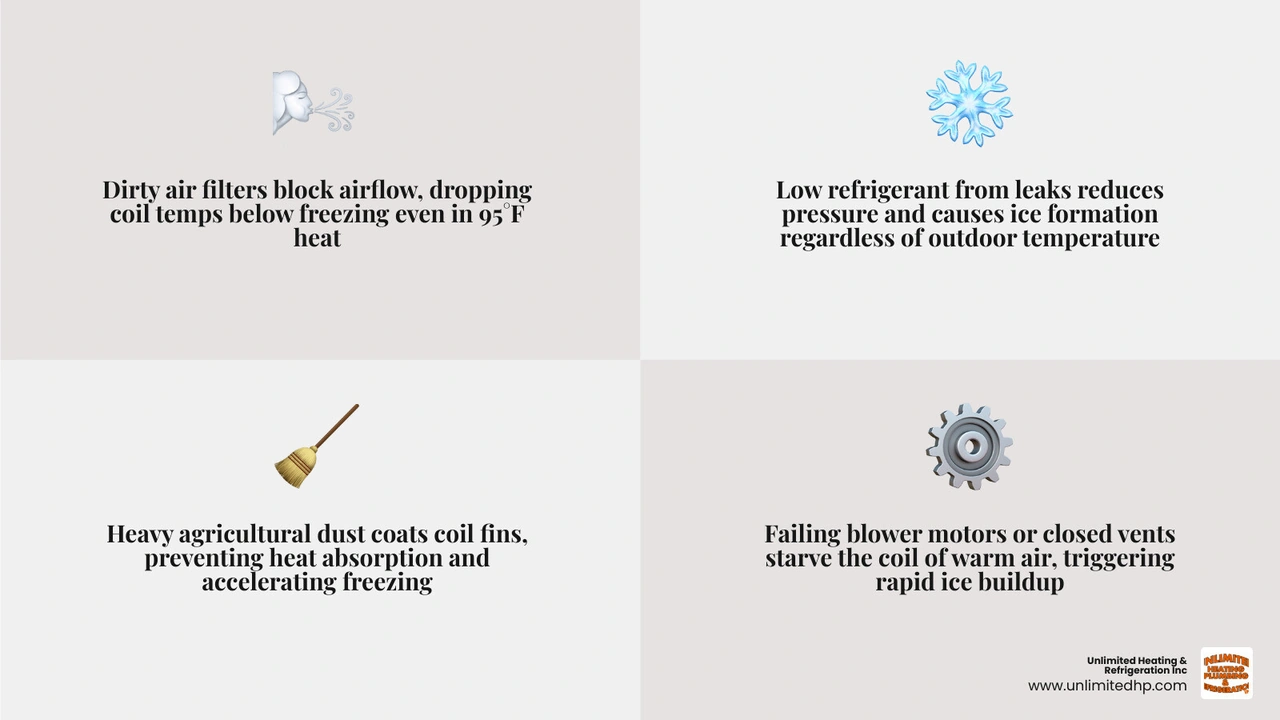
Infographic showing 6 causes of frozen evaporator coils in hot dry climates with icons for each cause infographic

Explore more about frozen evaporator coil in a hot dry climate what causes it:

Understanding the Summer Paradox: How a Coil Freezes in 100-Degree Heat

It seems completely backward. The sun is beating down on the Palouse, the dry summer wind is blowing, and your outdoor thermometer is pushing triple digits. Yet, inside your home, your air conditioning system has transformed into a miniature glacier. How is this thermodynamically possible?

To understand this summer paradox, we have to look at how your air conditioner actually works. Your AC does not "create" cold air; instead, it removes heat from your indoor air. The heavy lifter in this process is the evaporator coil, typically located inside your indoor air handler or furnace closet.

Under normal operating conditions, liquid refrigerant enters the evaporator coil under low pressure, which makes it extremely cold—usually hovering around 40°F. As your indoor blower fan pushes warm household air across these cold copper fins, the refrigerant absorbs the heat from the air. This heat transfer cools the air down before it is blown back into your living spaces, while the warmed refrigerant travels outdoors to release that heat.

However, this delicate thermodynamic balance relies entirely on a steady, unrestricted stream of warm air. When the airflow is choked off or the refrigerant charge is incorrect, the temperature of the evaporator coil drops below the freezing point of water (32°F).

Even in a dry climate like ours, there is still moisture present in your indoor air (from breathing, cooking, and showering). As this moisture passes over the sub-freezing coil, it instantly condenses and freezes into frost. This frost acts as an insulating blanket, further blocking what little airflow was left and triggering a rapid snowball effect of ice accumulation.

Understanding this cycle is key to recognizing why How Hot Dry Palouse Summers Make Your AC Work Harder Than Coastal Climates. When our systems are pushed to their absolute limits, any minor airflow or mechanical issue can quickly result in your AC Running Constantly in Palouse Summer Heat until it eventually freezes solid.

Frozen Evaporator Coil in a Hot Dry Climate What Causes It

Arid and semi-arid environments present a unique set of challenges for air conditioning systems. While high-humidity climates deal with massive amounts of condensation that can overload drain pans, hot and dry climates have a different nemesis: airborne dust, soil particles, and severe temperature swings.
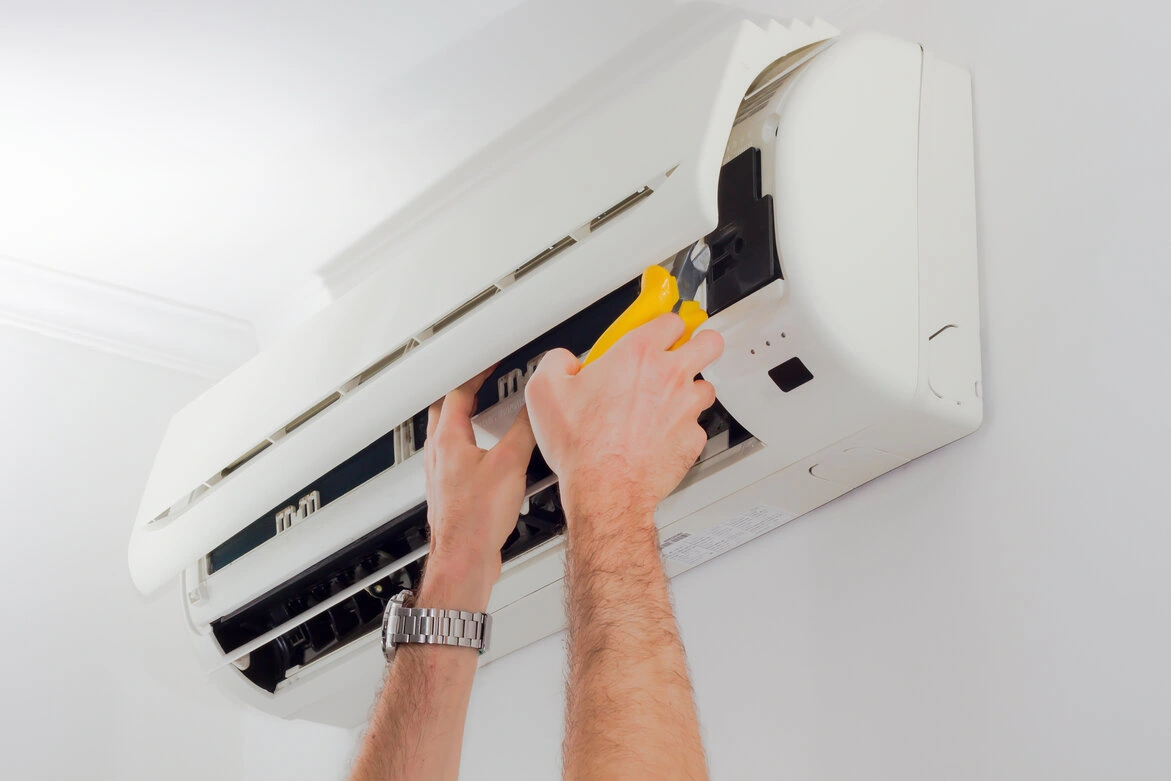
dusty air conditioning evaporator coil covered in dirt and ice

In Eastern Washington and Northern Idaho, our summer climate is heavily influenced by the surrounding agricultural landscape. During harvest and dry spells, fine soil dust and crop residue fill the air. When we look at what causes a frozen evaporator coil in a hot dry climate what causes it, we must account for these environmental factors.

When agricultural dust bypasses or penetrates your filtration system, it settles directly onto the wet surface of the evaporator coil. This creates a thick, muddy barrier on the fins. This layer of grime acts as an insulator, preventing the warm indoor air from transferring its heat to the refrigerant. As a result, the refrigerant remains too cold, the coil temperature plunges past the freezing mark, and ice begins to form.

If you are noticing your system struggling, understanding Why AC Is Freezing Up Lewiston or Moscow homes often comes down to analyzing these localized environmental impacts.

Airflow Restrictions: The Primary Frozen Evaporator Coil in a Hot Dry Climate What Causes It Culprit

By far, the most common reason an evaporator coil freezes up is restricted airflow. If warm air cannot pass over the coil at the correct volume—typically 350 to 400 cubic feet per minute (CFM) per ton of cooling capacity—the coil will freeze.

Several factors can restrict this crucial airflow in your home:

  • Dirty Air Filters: This is the single most common cause of frozen AC units. In our region, standard filters clog much faster than the manufacturer-recommended 90 days. When agricultural dust, pollen, and pet dander saturate the filter, it acts like a wall, starving the blower fan of air.
  • Blocked or Closed Vents: Many homeowners mistakenly believe that closing vents in unused rooms saves energy. In reality, closing more than one or two registers disrupts the system's static pressure, drastically reducing airflow across the evaporator coil and causing it to freeze within hours. Similarly, furniture, drapes, or storage boxes blocking return air grilles will cause the same bottleneck.
  • Failing Blower Motors: If the blower fan motor is failing, running at a reduced speed, or has a bad capacitor, it cannot push enough air over the coil. Even with a brand-new filter, a weak blower will guarantee a frozen system.
  • Dirty Blower Wheels: Over time, fine dust settles on the curved blades of the blower wheel, reducing its aerodynamic efficiency. A dirty blower wheel might spin at full speed but move only a fraction of the air it is supposed to.

Because of our unique geographical conditions, we must pay close attention to air filtration. Discovering Why Agricultural Dust From the Palouse Clogs AC Coils Faster Than Average helps homeowners understand why standard monthly filter checks are so critical during the peak of summer.

Low Refrigerant Leaks: Another Frozen Evaporator Coil in a Hot Dry Climate What Causes It Factor

The second major cause of a frozen evaporator coil is a low refrigerant charge, which is always the result of a leak.

It seems counterintuitive that less cooling fluid would make a system freeze more, but it comes down to basic physics. When an air conditioner is low on refrigerant, the pressure inside the evaporator coil drops. According to thermodynamic laws, a drop in pressure directly results in a drop in temperature.

With fewer refrigerant molecules circulating through the coil, the remaining refrigerant expands much more than it is designed to. This extreme expansion causes the coil temperature to drop well below 32°F. Frost begins to form at the entry point of the coil where the pressure is lowest. Over a short period, this localized frost accumulates, blocks the airflow through the rest of the coil, and leads to a complete, solid freeze-up of the entire indoor unit and the outdoor copper lines.

Furthermore, running a system with low refrigerant in high-heat conditions is incredibly dangerous for your equipment. We often discuss Does Extreme Heat Combined With Heavy Dust Exposure Shorten AC Lifespan because the compressor relies on the returning cool refrigerant gas to keep itself from overheating.

Additionally, understanding How Agricultural Dust Damages AC Condenser Coils in Northern Idaho highlights how outdoor environmental factors can combine with indoor issues to accelerate system failure.

Thermostat Malfunctions and Overnight Temperature Drops

Your thermostat is the brain of your HVAC system. If it fails to communicate correctly, it can easily cause your evaporator coil to freeze.

A miscalibrated or broken thermostat may fail to shut off the outdoor condenser unit when your home reaches the target temperature. If the system runs continuously without cycling off, the coil never has a chance to naturally shed the light frost that can accumulate during normal operation.

This issue is amplified by our high-desert climate, which experiences dramatic day-to-night temperature swings. In places like Pullman, Moscow, and Colfax, a scorching 95°F afternoon can easily give way to a crisp 50°F night.

If your thermostat is set to a very low temperature and left running overnight, the system will attempt to cool your home when the outdoor air is already cool. Air conditioners are not designed to operate when outdoor temperatures drop below 60°F to 65°F. Running the AC in low ambient conditions causes an excessive pressure drop in the system, sending the evaporator coil temperature below freezing and creating a solid block of ice by morning.

As we navigate the cooling demands of summer 2026, keeping your thermostat programmed to account for these cool summer nights is a simple yet highly effective way to protect your equipment.

How to Safely Thaw and Diagnose Your Frozen AC System

If you walk into your utility closet or look at your outdoor unit and spot ice, you must act immediately. Continuing to run your air conditioner with a frozen coil is a recipe for catastrophic equipment damage.

Before you can diagnose the root cause of the problem, the ice must be completely cleared. Attempting to run diagnostics on a frozen system is impossible because the ice completely masks the true pressure and airflow readings.

If you want to start troubleshooting yourself, we recommend checking out our guide on AC Troubleshooting Before Calling a Pro to ensure you handle the initial steps safely.

Step-by-Step Defrosting Protocol

Thawing an evaporator coil must be done patiently and safely. Never use sharp objects, screwdrivers, or hammers to chip away at the ice, as you will easily puncture the soft copper tubing and cause a massive refrigerant leak.

Follow this step-by-step protocol to thaw your system safely:

  1. Shut Down the Cooling: Turn your thermostat completely to the OFF position. This stops the outdoor compressor from running and producing more cold refrigerant, halting the freezing process.
  2. Turn the Fan to ON: Switch your thermostat’s fan setting from "AUTO" to ON. This forces the indoor blower motor to run continuously, pulling warm indoor air across the frozen coil to melt the ice naturally.
  3. Check the Air Filter: While the system is thawing, slide out your air filter. If it is dark, dusty, or clogged, discard it immediately. Keep the filter out until the system is completely dry, then replace it with a fresh, clean one.
  4. Manage the Meltwater: A frozen coil holds a surprising amount of water. As it melts, this water will rush into your condensate drain pan. Make sure your drain line is completely clear. Keep an eye out for overflowing water, especially if your air handler is located in an attic or closet where water overflow can damage drywall. Have towels and a wet/dry shop vacuum ready.
  5. Let It Dry Completely: Depending on the thickness of the ice, thawing can take anywhere from 2 to 6 hours. Do not attempt to turn the cooling back on until the ice is completely gone and the coil has had time to dry.

Regular preventive care is the best way to avoid this messy situation entirely. Incorporating Regular AC Maintenance for Homes into your yearly schedule keeps your drain lines clear and your system running smoothly.

When to Call a Professional HVAC Technician

Once your system is fully thawed and you have installed a clean filter, you can try running the AC again. If the system runs beautifully and does not freeze up again, your culprit was likely a severely clogged filter or a blocked vent that you have now cleared.

However, you must call a professional licensed technician if you experience any of the following:

  • The Coil Refreezes: If ice begins to reform on the coil within hours of thawing, you have a deeper issue like a refrigerant leak or a failing blower motor.
  • Suspected Refrigerant Leak: Refrigerant handling is strictly regulated and requires specialized tools, pressure gauges, and EPA certification to diagnose and repair safely.
  • Weak Airflow After Thawing: If the air blowing from your vents feels exceptionally weak even with a fresh filter, your blower motor or run capacitor is likely failing.
  • Saturated or Blocked Evaporator Fins: If the coil itself is caked in fine agricultural dust, cleaning it requires specialized, non-acidic foaming chemical cleaners that must be carefully applied and rinsed to avoid damaging the unit or your home.

When you need professional eyes on your system, scheduling AC Maintenance Moscow ID or AC Maintenance Lewiston ID ensures that our experienced technicians can run a full diagnostic, check your system's superheat and subcooling, and locate the exact root cause of the freeze-up.

Frequently Asked Questions About Frozen AC Coils

To help you quickly navigate this frustrating issue, we have gathered answers to some of the most common questions homeowners ask when dealing with a frozen system.

Can I run my AC with a frozen evaporator coil?

No, absolutely not. Running your air conditioner with a frozen evaporator coil can cause irreparable, catastrophic damage to your system—most notably to your compressor.

The compressor is the "heart" of your AC, located in the outdoor unit. It is designed to compress cool refrigerant gas. When the indoor coil is frozen solid, the heat exchange process stops completely. This means the liquid refrigerant passing through the coil does not evaporate into a gas. Instead, it travels back down the copper lines to the compressor as a cold liquid.

Compressors cannot compress liquids. This phenomenon, known as "liquid slugging," will destroy the internal valves of your compressor, leading to total system failure. Replacing a compressor is one of the most expensive repairs in the HVAC industry, often forcing homeowners to replace the entire outdoor unit.

How long does it take for a frozen AC coil to thaw?

The defrosting time depends on the severity of the ice buildup and the method you use:

  • Fan-Only Method (Recommended): If you turn the AC off and set the indoor fan to "ON," a moderate layer of ice will typically melt in 1 to 4 hours. The moving air accelerates the heat transfer, safely melting the ice from the inside out.
  • System Completely Off: If you turn the entire system off (including the fan), it can take 2 to 6 hours (or sometimes overnight) to melt completely, as there is no active airflow to help transfer heat.

Never use high-heat sources like propane torches or heat guns to speed up the process. The extreme thermal shock can crack the copper coils or damage the surrounding plastic drain pan and electrical wiring.

How do heat pumps differ from standard ACs when freezing?

While standard air conditioners only cool your home, a heat pump can reverse its cycle to provide heat during our chilly Idaho winters. Because of this, heat pumps deal with freezing in two different ways:

  • In the Summer (Cooling Mode): A heat pump behaves exactly like a standard air conditioner. If it freezes up in the summer, it is due to the same culprits: restricted airflow, dirty coils, or a refrigerant leak.
  • In the Winter (Heating Mode): It is actually completely normal for an outdoor heat pump coil to develop a light layer of frost during the winter because it is extracting heat from the cold outdoor air. To manage this, heat pumps are equipped with an automatic defrost cycle. The system temporarily reverses itself into cooling mode for a few minutes, sending hot refrigerant to the outdoor coil to melt the ice before switching back to heating. If your heat pump is covered in thick, solid ice in the winter, it usually indicates a failure in the defrost control board, a bad sensors, or a malfunctioning reversing valve.

Conclusion

A frozen evaporator coil is a serious warning sign that your air conditioning system is under extreme stress. Whether it is caused by a simple clogged filter, a heavy buildup of agricultural dust, or a hard-to-find refrigerant leak, ignoring the ice will lead to costly compressor damage.

At Unlimited Heating & Refrigeration Inc, we have been keeping homes comfortable across the Palouse for over 20 years. As a family-owned business and a trusted Daikin dealer, we stand behind our work with our outstanding Comfort Promise and 12-year warranty options. We proudly serve homeowners in Moscow, ID, Lewiston, ID, Pullman, WA, Colfax, WA, and all surrounding areas.

If you are dealing with a stubborn frozen coil or want to schedule a preventative tune-up to keep your system running flawlessly through the hottest months of the year, visit our AC Troubleshooting Page to connect with our expert team today!

Why a Frozen Evaporator Coil in a Hot, Dry Climate Happens — and What Causes It

A frozen evaporator coil in a hot dry climate what causes it is one of the most confusing AC problems homeowners in the Moscow and Lewiston, Idaho area face every summer. When it is 95°F outside and your AC stops cooling, the last thing you expect to find is a block of ice inside your air handler.

Here is a quick answer before we go deeper:

Top causes of a frozen evaporator coil in a hot, dry climate:

  1. Dirty or clogged air filter — restricts airflow across the coil, causing surface temperatures to drop below 32°F
  2. Low refrigerant from a leak — drops coil pressure and temperature even when outdoor heat is extreme
  3. Dirty evaporator coil — agricultural dust and arid-climate debris coat the coil fins, cutting heat transfer
  4. Blocked or closed return vents — starves the system of warm return air, freezing the coil within hours
  5. Failing blower motor — reduces airflow just like a clogged filter, with the same freezing result
  6. Thermostat malfunction — keeps the system running when it should cycle off, especially during overnight temperature drops

The outdoor heat is irrelevant to what happens inside the coil. The coil freezes because of what is happening inside the system — not outside it.

The short version: your AC evaporator coil absorbs heat from indoor air. If warm air stops moving across it — for any reason — the coil surface drops below freezing. Moisture in the air then turns to ice on the coil fins. Once ice builds up, it blocks airflow further, making the problem worse by the hour. In arid regions like the Palouse, heavy agricultural dust accelerates this cycle dramatically compared to other parts of the country.

Infographic showing 6 causes of frozen evaporator coils in hot dry climates with icons for each cause infographic

Explore more about frozen evaporator coil in a hot dry climate what causes it:

Understanding the Summer Paradox: How a Coil Freezes in 100-Degree Heat

It seems completely backward. The sun is beating down on the Palouse, the dry summer wind is blowing, and your outdoor thermometer is pushing triple digits. Yet, inside your home, your air conditioning system has transformed into a miniature glacier. How is this thermodynamically possible?

To understand this summer paradox, we have to look at how your air conditioner actually works. Your AC does not "create" cold air; instead, it removes heat from your indoor air. The heavy lifter in this process is the evaporator coil, typically located inside your indoor air handler or furnace closet.

Under normal operating conditions, liquid refrigerant enters the evaporator coil under low pressure, which makes it extremely cold—usually hovering around 40°F. As your indoor blower fan pushes warm household air across these cold copper fins, the refrigerant absorbs the heat from the air. This heat transfer cools the air down before it is blown back into your living spaces, while the warmed refrigerant travels outdoors to release that heat.

However, this delicate thermodynamic balance relies entirely on a steady, unrestricted stream of warm air. When the airflow is choked off or the refrigerant charge is incorrect, the temperature of the evaporator coil drops below the freezing point of water (32°F).

Even in a dry climate like ours, there is still moisture present in your indoor air (from breathing, cooking, and showering). As this moisture passes over the sub-freezing coil, it instantly condenses and freezes into frost. This frost acts as an insulating blanket, further blocking what little airflow was left and triggering a rapid snowball effect of ice accumulation.

Understanding this cycle is key to recognizing why How Hot Dry Palouse Summers Make Your AC Work Harder Than Coastal Climates. When our systems are pushed to their absolute limits, any minor airflow or mechanical issue can quickly result in your AC Running Constantly in Palouse Summer Heat until it eventually freezes solid.

Frozen Evaporator Coil in a Hot Dry Climate What Causes It

Arid and semi-arid environments present a unique set of challenges for air conditioning systems. While high-humidity climates deal with massive amounts of condensation that can overload drain pans, hot and dry climates have a different nemesis: airborne dust, soil particles, and severe temperature swings.

dusty air conditioning evaporator coil covered in dirt and ice

In Eastern Washington and Northern Idaho, our summer climate is heavily influenced by the surrounding agricultural landscape. During harvest and dry spells, fine soil dust and crop residue fill the air. When we look at what causes a frozen evaporator coil in a hot dry climate what causes it, we must account for these environmental factors.

When agricultural dust bypasses or penetrates your filtration system, it settles directly onto the wet surface of the evaporator coil. This creates a thick, muddy barrier on the fins. This layer of grime acts as an insulator, preventing the warm indoor air from transferring its heat to the refrigerant. As a result, the refrigerant remains too cold, the coil temperature plunges past the freezing mark, and ice begins to form.

If you are noticing your system struggling, understanding Why AC Is Freezing Up Lewiston or Moscow homes often comes down to analyzing these localized environmental impacts.

Airflow Restrictions: The Primary Frozen Evaporator Coil in a Hot Dry Climate What Causes It Culprit

By far, the most common reason an evaporator coil freezes up is restricted airflow. If warm air cannot pass over the coil at the correct volume—typically 350 to 400 cubic feet per minute (CFM) per ton of cooling capacity—the coil will freeze.

Several factors can restrict this crucial airflow in your home:

  • Dirty Air Filters: This is the single most common cause of frozen AC units. In our region, standard filters clog much faster than the manufacturer-recommended 90 days. When agricultural dust, pollen, and pet dander saturate the filter, it acts like a wall, starving the blower fan of air.
  • Blocked or Closed Vents: Many homeowners mistakenly believe that closing vents in unused rooms saves energy. In reality, closing more than one or two registers disrupts the system's static pressure, drastically reducing airflow across the evaporator coil and causing it to freeze within hours. Similarly, furniture, drapes, or storage boxes blocking return air grilles will cause the same bottleneck.
  • Failing Blower Motors: If the blower fan motor is failing, running at a reduced speed, or has a bad capacitor, it cannot push enough air over the coil. Even with a brand-new filter, a weak blower will guarantee a frozen system.
  • Dirty Blower Wheels: Over time, fine dust settles on the curved blades of the blower wheel, reducing its aerodynamic efficiency. A dirty blower wheel might spin at full speed but move only a fraction of the air it is supposed to.

Because of our unique geographical conditions, we must pay close attention to air filtration. Discovering Why Agricultural Dust From the Palouse Clogs AC Coils Faster Than Average helps homeowners understand why standard monthly filter checks are so critical during the peak of summer.

Low Refrigerant Leaks: Another Frozen Evaporator Coil in a Hot Dry Climate What Causes It Factor

The second major cause of a frozen evaporator coil is a low refrigerant charge, which is always the result of a leak.

It seems counterintuitive that less cooling fluid would make a system freeze more, but it comes down to basic physics. When an air conditioner is low on refrigerant, the pressure inside the evaporator coil drops. According to thermodynamic laws, a drop in pressure directly results in a drop in temperature.

With fewer refrigerant molecules circulating through the coil, the remaining refrigerant expands much more than it is designed to. This extreme expansion causes the coil temperature to drop well below 32°F. Frost begins to form at the entry point of the coil where the pressure is lowest. Over a short period, this localized frost accumulates, blocks the airflow through the rest of the coil, and leads to a complete, solid freeze-up of the entire indoor unit and the outdoor copper lines.

Furthermore, running a system with low refrigerant in high-heat conditions is incredibly dangerous for your equipment. We often discuss Does Extreme Heat Combined With Heavy Dust Exposure Shorten AC Lifespan because the compressor relies on the returning cool refrigerant gas to keep itself from overheating.

Additionally, understanding How Agricultural Dust Damages AC Condenser Coils in Northern Idaho highlights how outdoor environmental factors can combine with indoor issues to accelerate system failure.

Thermostat Malfunctions and Overnight Temperature Drops

Your thermostat is the brain of your HVAC system. If it fails to communicate correctly, it can easily cause your evaporator coil to freeze.

A miscalibrated or broken thermostat may fail to shut off the outdoor condenser unit when your home reaches the target temperature. If the system runs continuously without cycling off, the coil never has a chance to naturally shed the light frost that can accumulate during normal operation.

This issue is amplified by our high-desert climate, which experiences dramatic day-to-night temperature swings. In places like Pullman, Moscow, and Colfax, a scorching 95°F afternoon can easily give way to a crisp 50°F night.

If your thermostat is set to a very low temperature and left running overnight, the system will attempt to cool your home when the outdoor air is already cool. Air conditioners are not designed to operate when outdoor temperatures drop below 60°F to 65°F. Running the AC in low ambient conditions causes an excessive pressure drop in the system, sending the evaporator coil temperature below freezing and creating a solid block of ice by morning.

As we navigate the cooling demands of summer 2026, keeping your thermostat programmed to account for these cool summer nights is a simple yet highly effective way to protect your equipment.

How to Safely Thaw and Diagnose Your Frozen AC System

If you walk into your utility closet or look at your outdoor unit and spot ice, you must act immediately. Continuing to run your air conditioner with a frozen coil is a recipe for catastrophic equipment damage.

Before you can diagnose the root cause of the problem, the ice must be completely cleared. Attempting to run diagnostics on a frozen system is impossible because the ice completely masks the true pressure and airflow readings.

If you want to start troubleshooting yourself, we recommend checking out our guide on AC Troubleshooting Before Calling a Pro to ensure you handle the initial steps safely.

Step-by-Step Defrosting Protocol

Thawing an evaporator coil must be done patiently and safely. Never use sharp objects, screwdrivers, or hammers to chip away at the ice, as you will easily puncture the soft copper tubing and cause a massive refrigerant leak.

Follow this step-by-step protocol to thaw your system safely:

  1. Shut Down the Cooling: Turn your thermostat completely to the OFF position. This stops the outdoor compressor from running and producing more cold refrigerant, halting the freezing process.
  2. Turn the Fan to ON: Switch your thermostat’s fan setting from "AUTO" to ON. This forces the indoor blower motor to run continuously, pulling warm indoor air across the frozen coil to melt the ice naturally.
  3. Check the Air Filter: While the system is thawing, slide out your air filter. If it is dark, dusty, or clogged, discard it immediately. Keep the filter out until the system is completely dry, then replace it with a fresh, clean one.
  4. Manage the Meltwater: A frozen coil holds a surprising amount of water. As it melts, this water will rush into your condensate drain pan. Make sure your drain line is completely clear. Keep an eye out for overflowing water, especially if your air handler is located in an attic or closet where water overflow can damage drywall. Have towels and a wet/dry shop vacuum ready.
  5. Let It Dry Completely: Depending on the thickness of the ice, thawing can take anywhere from 2 to 6 hours. Do not attempt to turn the cooling back on until the ice is completely gone and the coil has had time to dry.

Regular preventive care is the best way to avoid this messy situation entirely. Incorporating Regular AC Maintenance for Homes into your yearly schedule keeps your drain lines clear and your system running smoothly.

When to Call a Professional HVAC Technician

Once your system is fully thawed and you have installed a clean filter, you can try running the AC again. If the system runs beautifully and does not freeze up again, your culprit was likely a severely clogged filter or a blocked vent that you have now cleared.

However, you must call a professional licensed technician if you experience any of the following:

  • The Coil Refreezes: If ice begins to reform on the coil within hours of thawing, you have a deeper issue like a refrigerant leak or a failing blower motor.
  • Suspected Refrigerant Leak: Refrigerant handling is strictly regulated and requires specialized tools, pressure gauges, and EPA certification to diagnose and repair safely.
  • Weak Airflow After Thawing: If the air blowing from your vents feels exceptionally weak even with a fresh filter, your blower motor or run capacitor is likely failing.
  • Saturated or Blocked Evaporator Fins: If the coil itself is caked in fine agricultural dust, cleaning it requires specialized, non-acidic foaming chemical cleaners that must be carefully applied and rinsed to avoid damaging the unit or your home.

When you need professional eyes on your system, scheduling AC Maintenance Moscow ID or AC Maintenance Lewiston ID ensures that our experienced technicians can run a full diagnostic, check your system's superheat and subcooling, and locate the exact root cause of the freeze-up.

Frequently Asked Questions About Frozen AC Coils

To help you quickly navigate this frustrating issue, we have gathered answers to some of the most common questions homeowners ask when dealing with a frozen system.

Can I run my AC with a frozen evaporator coil?

No, absolutely not. Running your air conditioner with a frozen evaporator coil can cause irreparable, catastrophic damage to your system—most notably to your compressor.

The compressor is the "heart" of your AC, located in the outdoor unit. It is designed to compress cool refrigerant gas. When the indoor coil is frozen solid, the heat exchange process stops completely. This means the liquid refrigerant passing through the coil does not evaporate into a gas. Instead, it travels back down the copper lines to the compressor as a cold liquid.

Compressors cannot compress liquids. This phenomenon, known as "liquid slugging," will destroy the internal valves of your compressor, leading to total system failure. Replacing a compressor is one of the most expensive repairs in the HVAC industry, often forcing homeowners to replace the entire outdoor unit.

How long does it take for a frozen AC coil to thaw?

The defrosting time depends on the severity of the ice buildup and the method you use:

  • Fan-Only Method (Recommended): If you turn the AC off and set the indoor fan to "ON," a moderate layer of ice will typically melt in 1 to 4 hours. The moving air accelerates the heat transfer, safely melting the ice from the inside out.
  • System Completely Off: If you turn the entire system off (including the fan), it can take 2 to 6 hours (or sometimes overnight) to melt completely, as there is no active airflow to help transfer heat.

Never use high-heat sources like propane torches or heat guns to speed up the process. The extreme thermal shock can crack the copper coils or damage the surrounding plastic drain pan and electrical wiring.

How do heat pumps differ from standard ACs when freezing?

While standard air conditioners only cool your home, a heat pump can reverse its cycle to provide heat during our chilly Idaho winters. Because of this, heat pumps deal with freezing in two different ways:

  • In the Summer (Cooling Mode): A heat pump behaves exactly like a standard air conditioner. If it freezes up in the summer, it is due to the same culprits: restricted airflow, dirty coils, or a refrigerant leak.
  • In the Winter (Heating Mode): It is actually completely normal for an outdoor heat pump coil to develop a light layer of frost during the winter because it is extracting heat from the cold outdoor air. To manage this, heat pumps are equipped with an automatic defrost cycle. The system temporarily reverses itself into cooling mode for a few minutes, sending hot refrigerant to the outdoor coil to melt the ice before switching back to heating. If your heat pump is covered in thick, solid ice in the winter, it usually indicates a failure in the defrost control board, a bad sensors, or a malfunctioning reversing valve.

Conclusion

A frozen evaporator coil is a serious warning sign that your air conditioning system is under extreme stress. Whether it is caused by a simple clogged filter, a heavy buildup of agricultural dust, or a hard-to-find refrigerant leak, ignoring the ice will lead to costly compressor damage.

At Unlimited Heating & Refrigeration Inc, we have been keeping homes comfortable across the Palouse for over 20 years. As a family-owned business and a trusted Daikin dealer, we stand behind our work with our outstanding Comfort Promise and 12-year warranty options. We proudly serve homeowners in Moscow, ID, Lewiston, ID, Pullman, WA, Colfax, WA, and all surrounding areas.

If you are dealing with a stubborn frozen coil or want to schedule a preventative tune-up to keep your system running flawlessly through the hottest months of the year, visit our AC Troubleshooting Page to connect with our expert team today!

Customer Testimonials

Our customers love our service and support.

Design Element | Unlimited Heating Plumbing & Refrigeration IncDesign Element | Unlimited Heating Plumbing & Refrigeration Inc