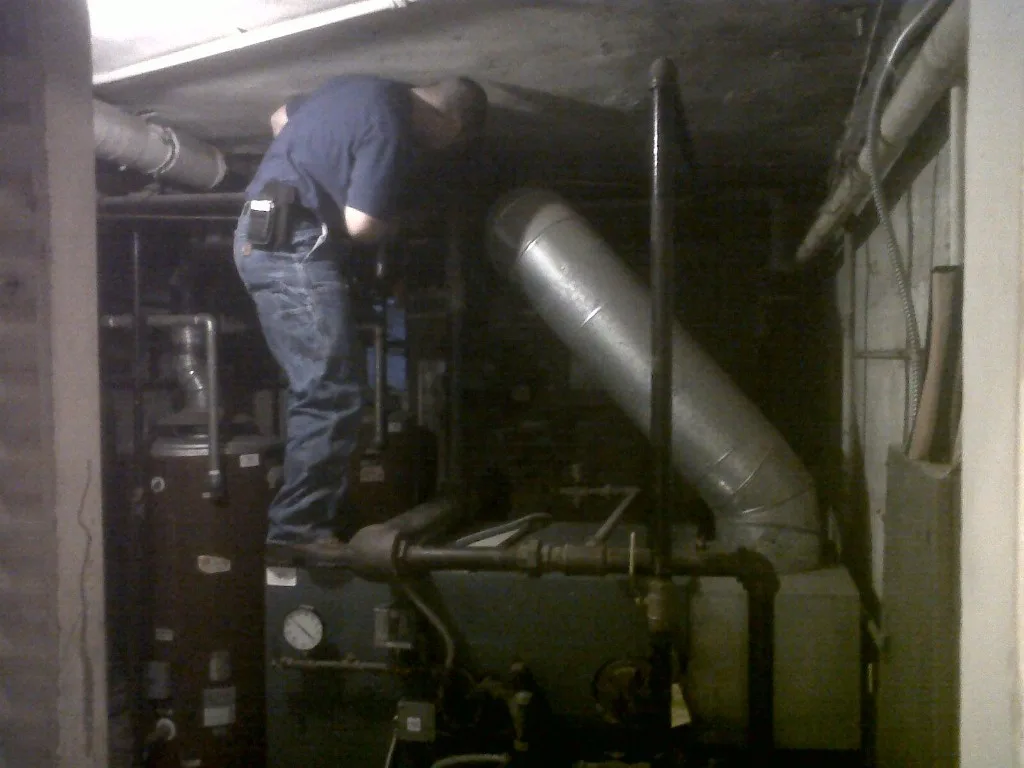
Why Agricultural Dust from Palouse Wheat Fields Is a Year-Round HVAC Problem
How agricultural dust from Palouse wheat fields impacts HVAC performance year round is one of the most underappreciated home comfort challenges facing residents in and around Moscow, ID. If you're looking for a quick answer, here it is:
Palouse agricultural dust degrades HVAC performance year round by:
- Clogging filters faster — fine loess-derived particles load up filters in weeks, not months
- Coating evaporator and condenser coils — reducing heat transfer and forcing longer run times
- Abrading blower motors and moving parts — silica-rich dust acts like fine sandpaper on bearings and valves
- Restricting airflow — increasing static pressure, causing short cycling and higher energy bills
- Carrying mold spores and pesticide residue — worsening indoor air quality beyond just dirt
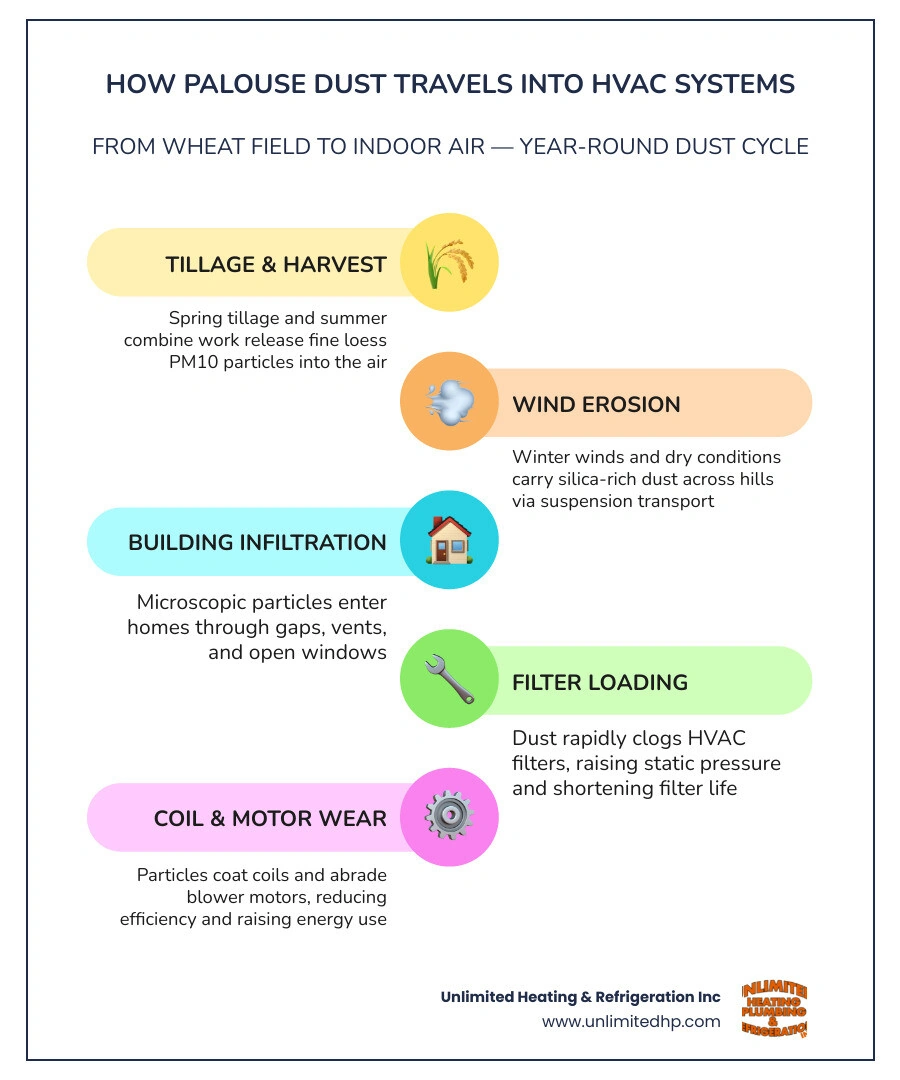
This isn't just a harvest-season problem. Palouse wheat farming generates dust through spring tillage, summer harvest, fall seeding, and winter wind events — meaning your HVAC system faces elevated particulate stress in every season.
The Palouse region sits atop some of the deepest loess deposits in North America. That loess — fine, windblown silt — is what makes the hills so fertile. It's also what makes the dust so damaging. Historical records from Columbia Plateau farming document dust storms severe enough to turn daytime skies dark, with a single storm capable of stripping several centimeters of topsoil from a field. Modern dryland wheat farming has increased aerial sediment flux by at least fourfold compared to pre-agricultural conditions, and researchers studying the region note that fine particulates dominate the dust profile through suspension transport — meaning the smallest, most penetrating particles travel the farthest and infiltrate buildings most easily.
For homeowners in Moscow, ID, that translates directly into HVAC filters that choke out ahead of schedule, coils that accumulate grime, and heating and cooling systems that work harder than they should — every single month of the year.
The Unique Composition of Palouse Soil and Its Threat to HVAC Systems
To understand why Palouse agricultural dust is so uniquely destructive to heating and cooling equipment, we have to look beneath the surface. The rolling hills of the Palouse are composed of loess-derived soils. While beautiful to look at, these soils are highly susceptible to wind erosion and easily break down into extremely fine particulate matter.
Several regional soil characteristics directly accelerate this dust generation:
- Declining Soil pH: Soil pH in the Palouse region has become increasingly acidic, ranging from 4.77–5.34 in the top 4 inches and 4.72–5.05 in the 4-to-8-inch depth. This acidity alters the soil structure, making it more fragile and prone to breaking apart into airborne dust.
- Loss of Organic Matter: Soil organic matter has shown a consistent downward trend in the region, with field trials showing a 7 g/kg decline in conventional tillage and no-till treatments without lime. Additionally, conventional tillage winter wheat–summer fallow systems experience an annual soil carbon loss of -0.11 t C ha⁻¹ yr⁻¹.
- Weakened Soil Aggregates: Without adequate organic matter to bind soil particles together into stable aggregates, the soil easily pulverizes under agricultural tires and tillage implements.
When these degraded, acidic soils are disturbed, they do not simply settle back down. Instead, they undergo suspension transport. Unlike larger sand particles that bounce along the ground (saltation) or roll (creep), the ultra-fine PM10 (particulate matter under 10 microns) in Palouse loess becomes suspended in the air. These microscopic particles can travel dozens of miles, easily bypassing standard home seals and finding their way into your home's air. If you are building a home or moving into a newly constructed property, this persistent infiltration makes planning for Indoor Air Quality New Construction a critical step rather than an afterthought.
The Mineral Makeup of Palouse Wheat Field Dust
What makes this suspended dust so dangerous to mechanical equipment is its mineral composition. Palouse soil is rich in crystalline silica (quartz). When agricultural dust is drawn into an HVAC system, it isn't just soft, harmless dirt; it is essentially a cloud of microscopic, abrasive glass.
As these silica particles circulate, they act like liquid sandpaper. They find their way into sealed motor bearings, coat sensitive electrical contacts, and physically wear down the protective coatings on heat exchanger surfaces and coils. Over time, this abrasive wear shortens the operating life of your equipment.
How Agricultural Dust from Palouse Wheat Fields Impacts HVAC Performance Year Round
Many homeowners assume that agricultural dust is strictly a late-summer concern. While the combine harvesters working the steep Palouse hills in August certainly create the most visible dust clouds, the threat to your HVAC system is a continuous, year-round cycle.
| Season | Agricultural Activity | Dust Characteristics | Primary HVAC Impact |
|---|---|---|---|
| Spring | Tillage & Field Prep | Damp but heavy PM10, fertilizer particulates | Rapid filter loading, coil grime accumulation |
| Summer | Harvesting | Dry silica, organic chaff, weed seeds, mold spores | Severe airflow restriction, mechanical abrasion, high cooling load |
| Fall | Seeding & Tillage | Fine windblown loess, dry soil dust | Heat exchanger coating, system short cycling |
| Winter | Wind Events over Fallow Ground | Windblown dust, freeze-thaw soil breakdown | Static pressure increases, indoor air stuffiness |
During high-use periods, this constant influx of outdoor particulates can cause your system to struggle. If you find your AC Running Constantly in Palouse Summer Heat, the root cause might not just be the temperature outside—it could be a system choked by months of agricultural dust accumulation.
Understanding How Agricultural Dust from Palouse Wheat Fields Impacts HVAC Performance Year Round in Spring and Summer
Spring on the Palouse brings extensive field preparation. Even with modern conservation efforts, conventional tillage breaks down soil aggregates, releasing fine dust that is easily swept up by spring windstorms.
By mid-to-late summer, the harvest begins. Specialized hillside combines traverse the steep slopes, cutting dry wheat and throwing massive plumes of dust, dry chaff, weed seeds, and mold spores into the air. High-wind events, common during the hot summer months, carry these dense dust clouds straight into residential areas like Moscow, ID, and Pullman, WA.
For homes equipped with ductless systems, this summer peak requires targeted maintenance. Knowing How to Maintain a Ductless Mini Split in a High Dust Palouse Environment is essential to prevent the outdoor condenser and indoor air handlers from becoming completely insulated by a thick layer of organic and mineral debris.
How Fall Seeding and Winter Winds Continue the Dust Cycle
Once the crops are harvested, the cycle does not stop. Fall brings another round of tillage and seeding for winter wheat. The dry stubble fields, if heavily tilled, leave the topsoil exposed to strong autumn winds.
In the winter, the freezing and thawing of the soil breaks down remaining soil aggregates into even finer particles. When strong winter winds blow across fallow or minimally vegetated fields, they pick up this loose, powdery loess. Because winter homes are tightly sealed to keep out the cold, any dust that does manage to infiltrate the envelope remains trapped inside, continuously cycling through the furnace. Understanding How a Mini Split Handles Both Extreme Summer Heat and Cold Idaho Winters can help you manage both the thermal demands and the filtration needs of your home during these dusty, cold months.
Mechanical Strain and Efficiency Loss in Heating and Cooling Systems
When agricultural dust enters an HVAC system, it acts as a silent efficiency killer. The system behaves like a giant vacuum, pulling airborne contaminants deep into its inner workings.
Over time, this accumulation causes severe mechanical strain. To keep your system running smoothly and avoid sudden breakdowns, it is vital to Remember These HVAC Maintenance Tips to Prevent Costly Repairs.
Filter Clogging and Airflow Resistance
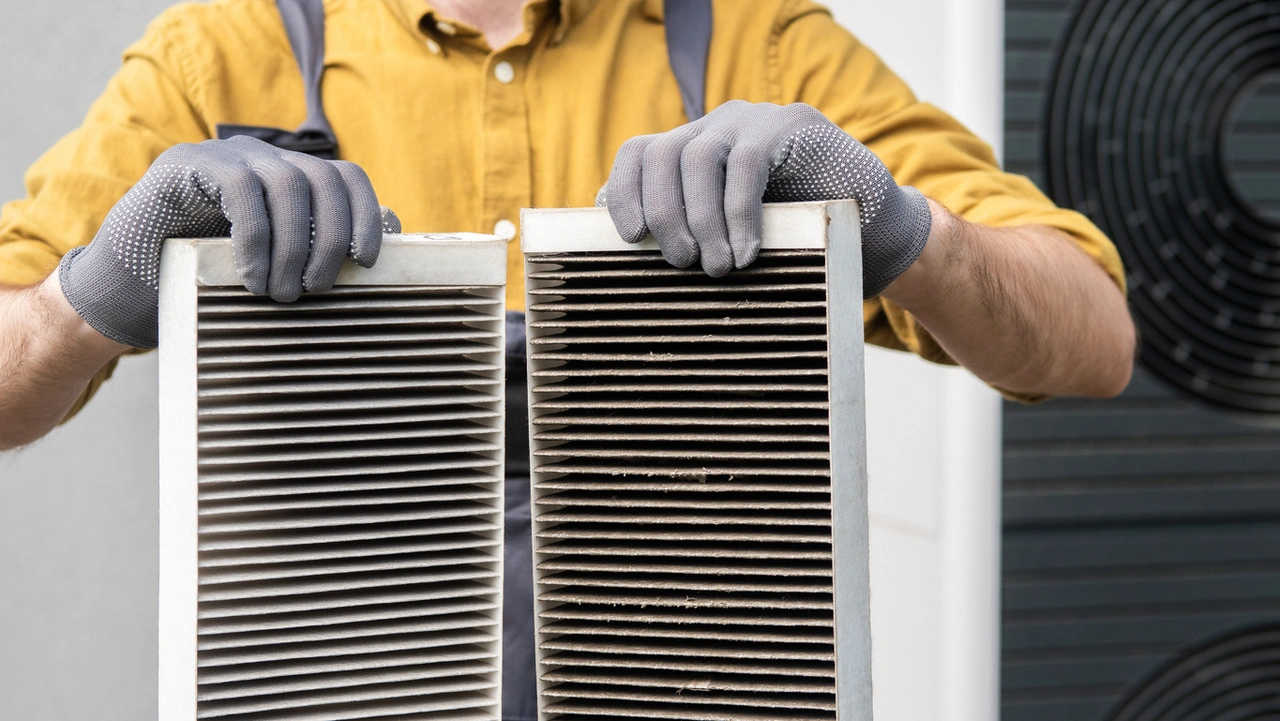
The first line of defense is your air filter. However, because Palouse dust is dominated by exceptionally fine suspension-transported PM10, standard low-MERV fiberglass filters are quickly overwhelmed.
As the filter becomes packed with fine dust, the system’s static pressure rises sharply. This means the blower motor has to work significantly harder to push air through the restricted filter. This resistance leads to:
- Increased Energy Consumption: The blower motor draws more electricity to overcome the high static pressure.
- Short Cycling: Restricted airflow causes heat exchangers to overheat or cooling coils to freeze, forcing the system to shut down prematurely and cycle back on rapidly.
- Uneven Temperatures: Rooms furthest from the air handler will receive little to no airflow, leaving your home uncomfortable.
To combat this, homeowners must look into Optimizing HVAC Systems for IAQ Homes by selecting high-quality pleated filters that balance particle capture with proper system airflow.
Abrasive Wear on Moving Parts and Coils
Any dust that manages to bypass a clogged or poorly fitted filter settles directly onto the internal components.
When a fine layer of silica-rich dust coats the indoor evaporator coil or the outdoor condenser coil, it acts as an insulating blanket. Because dust has poor thermal conductivity, it prevents the refrigerant inside the coils from efficiently absorbing or releasing heat. This forces your system to run longer cycles to achieve the thermostat's set temperature.
Additionally, the abrasive nature of silica dust accelerates wear on the blower motor's bearings and the compressor's internal valves. Without Regular AC Maintenance for Homes to physically wash away this abrasive buildup, the mechanical lifespan of these critical components can be cut short.
Indoor Air Quality and Health Risks for Palouse Residents
The impact of Palouse agricultural dust goes far beyond mechanical wear and tear; it poses a direct threat to the health of everyone inside your home. Because PM10 particles are small enough to bypass the body's natural defenses in the nose and throat, they can travel deep into the lungs.
This dust is far from sterile. As it is swept from the fields, it carries a complex mixture of:
- Microscopic Silica: Known to cause respiratory irritation and long-term lung inflammation.
- Agricultural Chemicals: Trace pesticide and herbicide residues bound to soil particles.
- Biological Pollutants: Mold spores, wild yeast, and organic crop chaff that thrive in harvesting environments.
For residents in our service areas—which you can review on our Who We Serve Moscow ID page—exposure to this airborne mixture can trigger asthma attacks, worsen chronic bronchitis, and cause persistent sinus irritation. Keeping these outdoor pollutants out of your indoor breathing zone requires a proactive approach to home filtration.
Best Practices for Protecting Your HVAC System in Moscow, ID
Fortunately, you do not have to let Palouse dust dictate your comfort or your utility bills. By implementing a few targeted strategies, you can keep your heating and cooling systems running at peak efficiency year round.
One of the most effective upgrades you can make is installing an Energy Recovery Ventilator (ERV) or Heat Recovery Ventilator (HRV). These systems bring fresh, pre-filtered outdoor air into your home while expelling stale indoor air, preventing the "stuffy house" syndrome common during dusty seasons. Furthermore, keeping up on routine checks is crucial; if you've ever wondered Does a Mini Split Need Annual Maintenance in a Harsh Inland Northwest Climate, the answer is a resounding yes—especially when surrounded by active dryland wheat fields.
Mitigating How Agricultural Dust from Palouse Wheat Fields Impacts HVAC Performance Year Round
To keep your system protected through every season, build these habits into your home maintenance routine:
- Perform Bi-Weekly Filter Checks: During peak spring tillage and late-summer harvest, pull your filter out every two weeks. If it looks grey or caked, replace it immediately rather than waiting for the standard 90-day window.
- Upgrade Your Filtration: Switch to high-quality pleated filters rated between MERV 11 and MERV 13. These are dense enough to trap fine silica and mold spores without dangerously restricting your system's airflow.
- Schedule Professional Coil Cleaning: At least once a year, have a professional technician chemically clean both your indoor evaporator coil and outdoor condenser coil to remove the baked-on "mud" that standard vacuuming cannot reach.
- Inspect and Seal Your Ductwork: Leaky ducts in attics or crawlspaces can act as straws, sucking dusty unconditioned air directly into your living spaces.
- Keep Up with Seasonal Tune-Ups: Before the winter cold sets in, review these Essential Furnace Maintenance Tips for Homes to ensure your heating system is clean, safe, and ready to handle the winter windblown dust.
Frequently Asked Questions about Palouse Agricultural Dust and HVACs
How often should I change my HVAC filter during the Palouse harvest season?
During the peak of the summer wheat harvest (typically late July through September), we highly recommend checking your filter every two weeks and replacing it at least every 30 days. The sheer volume of fine loess dust and organic chaff in the air can clog a standard filter in a fraction of its normal lifespan, leading to restricted airflow and system strain.
Can agricultural dust cause permanent damage to my heating and cooling system?
Yes. The high concentration of crystalline silica in Palouse soil makes the dust highly abrasive. If allowed to bypass your filtration system, it can wear down blower motor bearings, scratch compressor valves, and corrode aluminum coil fins. Over time, this mechanical wear leads to premature component failure and shortens the overall lifespan of your system.
Why does my home feel more humid and dusty during dryland wheat harvesting?
When fine agricultural dust coats your indoor evaporator coil, it creates an insulating barrier. This barrier prevents the cold refrigerant inside the coil from removing moisture from your indoor air. As a result, your air conditioner cannot dehumidify your home effectively, leaving the indoor air feeling sticky, warm, and dusty.
Conclusion
Living in the beautiful Palouse region means sharing our environment with one of the most productive agricultural landscapes in the country. However, protecting your home's comfort and your mechanical investments from the realities of dryland wheat farming requires specialized care.
At Unlimited Heating & Refrigeration Inc, we have spent over 20 years helping our neighbors in Moscow, ID, and the surrounding communities navigate the unique demands of our local climate. As a family-owned business and a trusted Daikin dealer, we back our work with a 12-year warranty and our signature Comfort Promise. We don't just fix HVAC systems; we design comprehensive indoor air quality solutions tailored to the unique challenges of the Inland Northwest.
Don't let the dust settle on your home's comfort. Schedule professional HVAC maintenance and dust mitigation services with Unlimited Heating & Refrigeration Inc today, and breathe easier knowing your system is fully protected year round.
Why Agricultural Dust from Palouse Wheat Fields Is a Year-Round HVAC Problem
How agricultural dust from Palouse wheat fields impacts HVAC performance year round is one of the most underappreciated home comfort challenges facing residents in and around Moscow, ID. If you're looking for a quick answer, here it is:
Palouse agricultural dust degrades HVAC performance year round by:
- Clogging filters faster — fine loess-derived particles load up filters in weeks, not months
- Coating evaporator and condenser coils — reducing heat transfer and forcing longer run times
- Abrading blower motors and moving parts — silica-rich dust acts like fine sandpaper on bearings and valves
- Restricting airflow — increasing static pressure, causing short cycling and higher energy bills
- Carrying mold spores and pesticide residue — worsening indoor air quality beyond just dirt
This isn't just a harvest-season problem. Palouse wheat farming generates dust through spring tillage, summer harvest, fall seeding, and winter wind events — meaning your HVAC system faces elevated particulate stress in every season.
The Palouse region sits atop some of the deepest loess deposits in North America. That loess — fine, windblown silt — is what makes the hills so fertile. It's also what makes the dust so damaging. Historical records from Columbia Plateau farming document dust storms severe enough to turn daytime skies dark, with a single storm capable of stripping several centimeters of topsoil from a field. Modern dryland wheat farming has increased aerial sediment flux by at least fourfold compared to pre-agricultural conditions, and researchers studying the region note that fine particulates dominate the dust profile through suspension transport — meaning the smallest, most penetrating particles travel the farthest and infiltrate buildings most easily.
For homeowners in Moscow, ID, that translates directly into HVAC filters that choke out ahead of schedule, coils that accumulate grime, and heating and cooling systems that work harder than they should — every single month of the year.

The Unique Composition of Palouse Soil and Its Threat to HVAC Systems
To understand why Palouse agricultural dust is so uniquely destructive to heating and cooling equipment, we have to look beneath the surface. The rolling hills of the Palouse are composed of loess-derived soils. While beautiful to look at, these soils are highly susceptible to wind erosion and easily break down into extremely fine particulate matter.
Several regional soil characteristics directly accelerate this dust generation:
- Declining Soil pH: Soil pH in the Palouse region has become increasingly acidic, ranging from 4.77–5.34 in the top 4 inches and 4.72–5.05 in the 4-to-8-inch depth. This acidity alters the soil structure, making it more fragile and prone to breaking apart into airborne dust.
- Loss of Organic Matter: Soil organic matter has shown a consistent downward trend in the region, with field trials showing a 7 g/kg decline in conventional tillage and no-till treatments without lime. Additionally, conventional tillage winter wheat–summer fallow systems experience an annual soil carbon loss of -0.11 t C ha⁻¹ yr⁻¹.
- Weakened Soil Aggregates: Without adequate organic matter to bind soil particles together into stable aggregates, the soil easily pulverizes under agricultural tires and tillage implements.
When these degraded, acidic soils are disturbed, they do not simply settle back down. Instead, they undergo suspension transport. Unlike larger sand particles that bounce along the ground (saltation) or roll (creep), the ultra-fine PM10 (particulate matter under 10 microns) in Palouse loess becomes suspended in the air. These microscopic particles can travel dozens of miles, easily bypassing standard home seals and finding their way into your home's air. If you are building a home or moving into a newly constructed property, this persistent infiltration makes planning for Indoor Air Quality New Construction a critical step rather than an afterthought.
The Mineral Makeup of Palouse Wheat Field Dust
What makes this suspended dust so dangerous to mechanical equipment is its mineral composition. Palouse soil is rich in crystalline silica (quartz). When agricultural dust is drawn into an HVAC system, it isn't just soft, harmless dirt; it is essentially a cloud of microscopic, abrasive glass.
As these silica particles circulate, they act like liquid sandpaper. They find their way into sealed motor bearings, coat sensitive electrical contacts, and physically wear down the protective coatings on heat exchanger surfaces and coils. Over time, this abrasive wear shortens the operating life of your equipment.
How Agricultural Dust from Palouse Wheat Fields Impacts HVAC Performance Year Round
Many homeowners assume that agricultural dust is strictly a late-summer concern. While the combine harvesters working the steep Palouse hills in August certainly create the most visible dust clouds, the threat to your HVAC system is a continuous, year-round cycle.
| Season | Agricultural Activity | Dust Characteristics | Primary HVAC Impact |
|---|---|---|---|
| Spring | Tillage & Field Prep | Damp but heavy PM10, fertilizer particulates | Rapid filter loading, coil grime accumulation |
| Summer | Harvesting | Dry silica, organic chaff, weed seeds, mold spores | Severe airflow restriction, mechanical abrasion, high cooling load |
| Fall | Seeding & Tillage | Fine windblown loess, dry soil dust | Heat exchanger coating, system short cycling |
| Winter | Wind Events over Fallow Ground | Windblown dust, freeze-thaw soil breakdown | Static pressure increases, indoor air stuffiness |
During high-use periods, this constant influx of outdoor particulates can cause your system to struggle. If you find your AC Running Constantly in Palouse Summer Heat, the root cause might not just be the temperature outside—it could be a system choked by months of agricultural dust accumulation.
Understanding How Agricultural Dust from Palouse Wheat Fields Impacts HVAC Performance Year Round in Spring and Summer
Spring on the Palouse brings extensive field preparation. Even with modern conservation efforts, conventional tillage breaks down soil aggregates, releasing fine dust that is easily swept up by spring windstorms.
By mid-to-late summer, the harvest begins. Specialized hillside combines traverse the steep slopes, cutting dry wheat and throwing massive plumes of dust, dry chaff, weed seeds, and mold spores into the air. High-wind events, common during the hot summer months, carry these dense dust clouds straight into residential areas like Moscow, ID, and Pullman, WA.
For homes equipped with ductless systems, this summer peak requires targeted maintenance. Knowing How to Maintain a Ductless Mini Split in a High Dust Palouse Environment is essential to prevent the outdoor condenser and indoor air handlers from becoming completely insulated by a thick layer of organic and mineral debris.
How Fall Seeding and Winter Winds Continue the Dust Cycle
Once the crops are harvested, the cycle does not stop. Fall brings another round of tillage and seeding for winter wheat. The dry stubble fields, if heavily tilled, leave the topsoil exposed to strong autumn winds.
In the winter, the freezing and thawing of the soil breaks down remaining soil aggregates into even finer particles. When strong winter winds blow across fallow or minimally vegetated fields, they pick up this loose, powdery loess. Because winter homes are tightly sealed to keep out the cold, any dust that does manage to infiltrate the envelope remains trapped inside, continuously cycling through the furnace. Understanding How a Mini Split Handles Both Extreme Summer Heat and Cold Idaho Winters can help you manage both the thermal demands and the filtration needs of your home during these dusty, cold months.
Mechanical Strain and Efficiency Loss in Heating and Cooling Systems
When agricultural dust enters an HVAC system, it acts as a silent efficiency killer. The system behaves like a giant vacuum, pulling airborne contaminants deep into its inner workings.

Over time, this accumulation causes severe mechanical strain. To keep your system running smoothly and avoid sudden breakdowns, it is vital to Remember These HVAC Maintenance Tips to Prevent Costly Repairs.
Filter Clogging and Airflow Resistance
The first line of defense is your air filter. However, because Palouse dust is dominated by exceptionally fine suspension-transported PM10, standard low-MERV fiberglass filters are quickly overwhelmed.
As the filter becomes packed with fine dust, the system’s static pressure rises sharply. This means the blower motor has to work significantly harder to push air through the restricted filter. This resistance leads to:
- Increased Energy Consumption: The blower motor draws more electricity to overcome the high static pressure.
- Short Cycling: Restricted airflow causes heat exchangers to overheat or cooling coils to freeze, forcing the system to shut down prematurely and cycle back on rapidly.
- Uneven Temperatures: Rooms furthest from the air handler will receive little to no airflow, leaving your home uncomfortable.
To combat this, homeowners must look into Optimizing HVAC Systems for IAQ Homes by selecting high-quality pleated filters that balance particle capture with proper system airflow.
Abrasive Wear on Moving Parts and Coils
Any dust that manages to bypass a clogged or poorly fitted filter settles directly onto the internal components.
When a fine layer of silica-rich dust coats the indoor evaporator coil or the outdoor condenser coil, it acts as an insulating blanket. Because dust has poor thermal conductivity, it prevents the refrigerant inside the coils from efficiently absorbing or releasing heat. This forces your system to run longer cycles to achieve the thermostat's set temperature.
Additionally, the abrasive nature of silica dust accelerates wear on the blower motor's bearings and the compressor's internal valves. Without Regular AC Maintenance for Homes to physically wash away this abrasive buildup, the mechanical lifespan of these critical components can be cut short.
Indoor Air Quality and Health Risks for Palouse Residents
The impact of Palouse agricultural dust goes far beyond mechanical wear and tear; it poses a direct threat to the health of everyone inside your home. Because PM10 particles are small enough to bypass the body's natural defenses in the nose and throat, they can travel deep into the lungs.
This dust is far from sterile. As it is swept from the fields, it carries a complex mixture of:
- Microscopic Silica: Known to cause respiratory irritation and long-term lung inflammation.
- Agricultural Chemicals: Trace pesticide and herbicide residues bound to soil particles.
- Biological Pollutants: Mold spores, wild yeast, and organic crop chaff that thrive in harvesting environments.
For residents in our service areas—which you can review on our Who We Serve Moscow ID page—exposure to this airborne mixture can trigger asthma attacks, worsen chronic bronchitis, and cause persistent sinus irritation. Keeping these outdoor pollutants out of your indoor breathing zone requires a proactive approach to home filtration.
Best Practices for Protecting Your HVAC System in Moscow, ID
Fortunately, you do not have to let Palouse dust dictate your comfort or your utility bills. By implementing a few targeted strategies, you can keep your heating and cooling systems running at peak efficiency year round.
One of the most effective upgrades you can make is installing an Energy Recovery Ventilator (ERV) or Heat Recovery Ventilator (HRV). These systems bring fresh, pre-filtered outdoor air into your home while expelling stale indoor air, preventing the "stuffy house" syndrome common during dusty seasons. Furthermore, keeping up on routine checks is crucial; if you've ever wondered Does a Mini Split Need Annual Maintenance in a Harsh Inland Northwest Climate, the answer is a resounding yes—especially when surrounded by active dryland wheat fields.
Mitigating How Agricultural Dust from Palouse Wheat Fields Impacts HVAC Performance Year Round
To keep your system protected through every season, build these habits into your home maintenance routine:
- Perform Bi-Weekly Filter Checks: During peak spring tillage and late-summer harvest, pull your filter out every two weeks. If it looks grey or caked, replace it immediately rather than waiting for the standard 90-day window.
- Upgrade Your Filtration: Switch to high-quality pleated filters rated between MERV 11 and MERV 13. These are dense enough to trap fine silica and mold spores without dangerously restricting your system's airflow.
- Schedule Professional Coil Cleaning: At least once a year, have a professional technician chemically clean both your indoor evaporator coil and outdoor condenser coil to remove the baked-on "mud" that standard vacuuming cannot reach.
- Inspect and Seal Your Ductwork: Leaky ducts in attics or crawlspaces can act as straws, sucking dusty unconditioned air directly into your living spaces.
- Keep Up with Seasonal Tune-Ups: Before the winter cold sets in, review these Essential Furnace Maintenance Tips for Homes to ensure your heating system is clean, safe, and ready to handle the winter windblown dust.
Frequently Asked Questions about Palouse Agricultural Dust and HVACs
How often should I change my HVAC filter during the Palouse harvest season?
During the peak of the summer wheat harvest (typically late July through September), we highly recommend checking your filter every two weeks and replacing it at least every 30 days. The sheer volume of fine loess dust and organic chaff in the air can clog a standard filter in a fraction of its normal lifespan, leading to restricted airflow and system strain.
Can agricultural dust cause permanent damage to my heating and cooling system?
Yes. The high concentration of crystalline silica in Palouse soil makes the dust highly abrasive. If allowed to bypass your filtration system, it can wear down blower motor bearings, scratch compressor valves, and corrode aluminum coil fins. Over time, this mechanical wear leads to premature component failure and shortens the overall lifespan of your system.
Why does my home feel more humid and dusty during dryland wheat harvesting?
When fine agricultural dust coats your indoor evaporator coil, it creates an insulating barrier. This barrier prevents the cold refrigerant inside the coil from removing moisture from your indoor air. As a result, your air conditioner cannot dehumidify your home effectively, leaving the indoor air feeling sticky, warm, and dusty.
Conclusion
Living in the beautiful Palouse region means sharing our environment with one of the most productive agricultural landscapes in the country. However, protecting your home's comfort and your mechanical investments from the realities of dryland wheat farming requires specialized care.
At Unlimited Heating & Refrigeration Inc, we have spent over 20 years helping our neighbors in Moscow, ID, and the surrounding communities navigate the unique demands of our local climate. As a family-owned business and a trusted Daikin dealer, we back our work with a 12-year warranty and our signature Comfort Promise. We don't just fix HVAC systems; we design comprehensive indoor air quality solutions tailored to the unique challenges of the Inland Northwest.
Don't let the dust settle on your home's comfort. Schedule professional HVAC maintenance and dust mitigation services with Unlimited Heating & Refrigeration Inc today, and breathe easier knowing your system is fully protected year round.
Customer Testimonials
Our customers love our service and support.


